A look back and the path forward
Insights from the HBCU Initiative


‘We started by listening’
In 2020, amid a global pandemic and a pivotal racial reckoning in American history, Strada asked itself a critical question: “How can we make a meaningful contribution — one grounded in action?”
From that question emerged Strada’s largest investment, one with a direct connection to the future of hundreds of students at historically Black colleges and universities. These institutions have long played a vital role in providing pathways to opportunity for those who have faced the greatest challenges.
The Strada board of trustees had a vision: to support the existing work of historically Black colleges and universities, known for their unwavering commitment to excellence, deep understanding of developing leaders, and long history of strengthening community.
We started by listening. Our team reached out to all of the nation’s accredited HBCUs, cultivated a framework from what we learned from them, and crafted an initiative around those needs. From those conversations emerged the Strada HBCU Initiative, a $25 million commitment to supporting each HBCU's unique priorities while working toward our shared vision of expanded opportunity.
Today, midway through the lifecycle of the eight-year initiative, the nation remains in need of renewed focus on what it takes to shape future leaders who push the boundaries of what is possible, help their communities navigate change, and provide stability during chaotic times. Strada Scholars at our 47 partner institutions are poised to step into their potential with resilience.
We celebrate both progress made and potential ahead.
Aminta H. Breaux, Ph.D.
Co-chair, Strada HBCU advisory council
President, Bowie State University
Marshall Grigsby, Ph.D.
Co-chair, Strada HBCU advisory council
Former president, Benedict College
“This program is designed to be more than just a scholarship program for students who do exceptionally well academically. HBCU presidents identify Strada Scholars with leadership traits that will enable them to be leaders not just in their own community, but on the world stage.”
— Edward R. Schmidt, trustee emeritus, Strada board of trustees
Chair, 2017 to 2020
CELEBRATING HBCUS
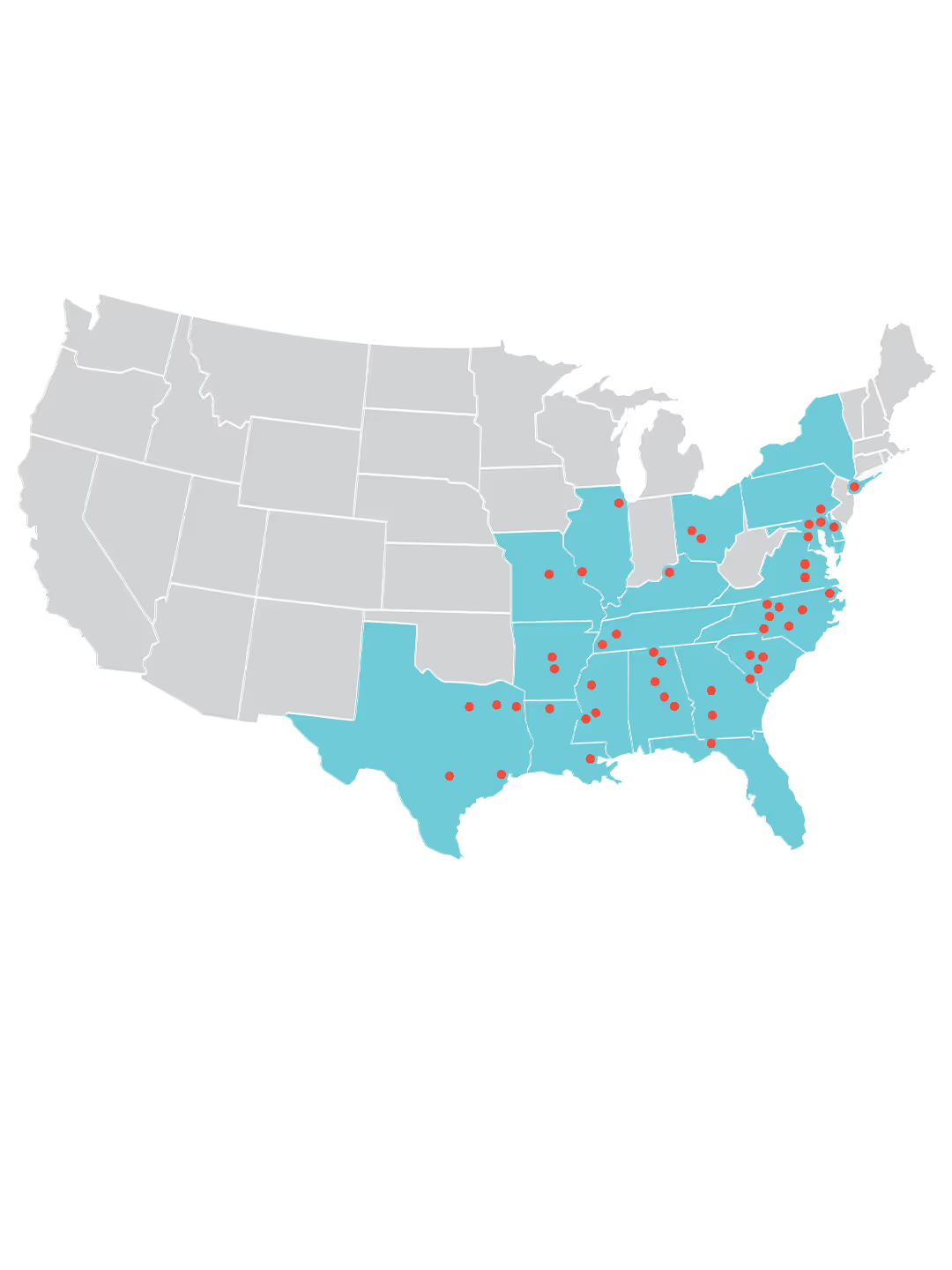
Bringing together nearly half of the nation’s HBCUs
Through the Strada HBCU Initiative, 47 institutions across 21 states come together to build tomorrow’s leaders while celebrating the legacy of HBCUs and ensuring Strada Scholars receive ample education-to-career guidance, scholarship support, and work-based learning opportunities that prepare them for success after graduation.

Who are the Strada Scholars?
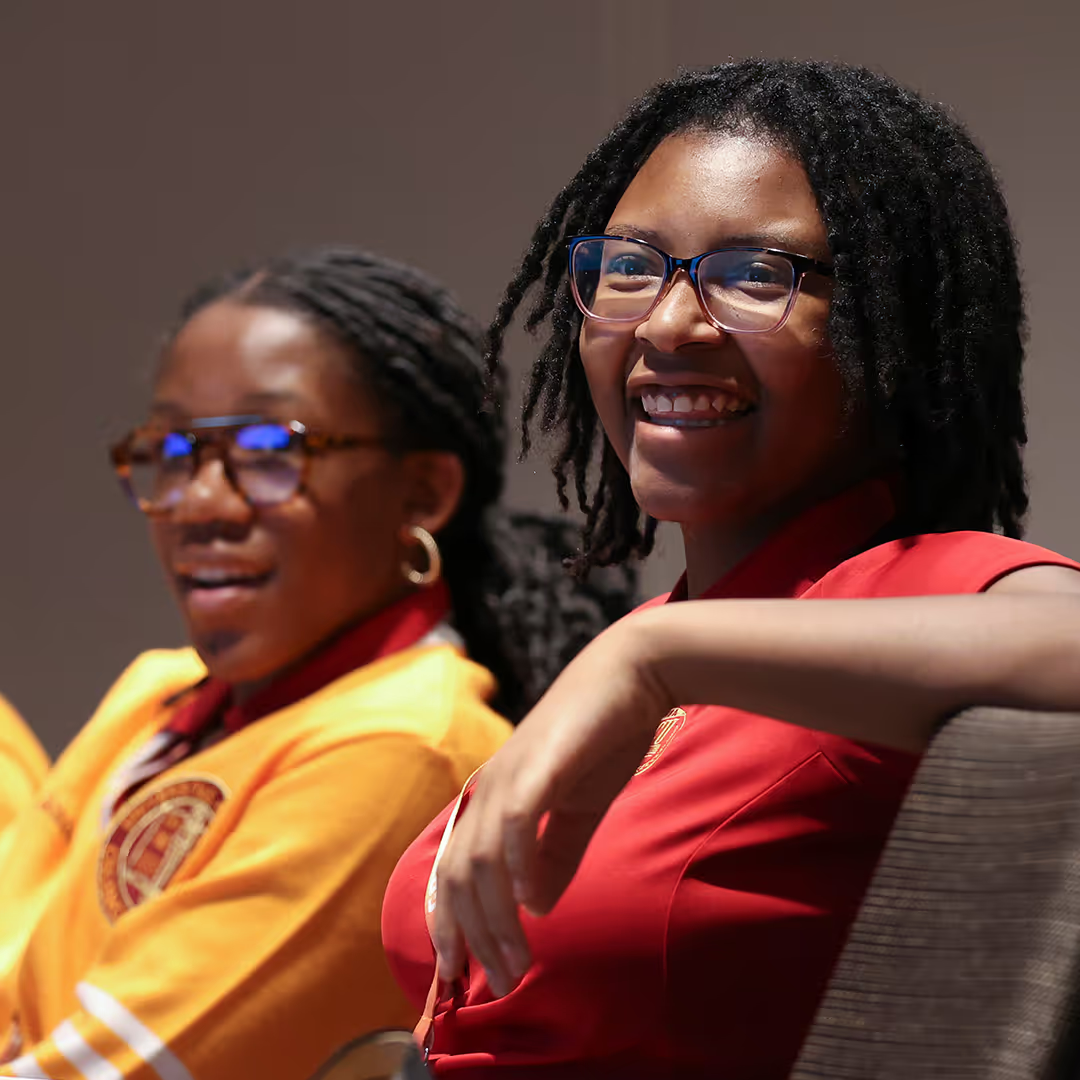
The HBCU Initiative has supported more than 470 Strada Scholars at partner institutions, providing to the students a renewable annual scholarship, yearly stipends to offset the cost of participating in internships, and professional development through career readiness and leadership development programming.
Strada Scholars are selected by their HBCU chancellors, presidents and campus leaders from the pool of students participating in existing honors and scholar programs.
“A contact I made through the HBCU Initiative single-handedly changed the trajectory of my life.”
— Jeremy, Class of 2025 Strada Scholar, Central State University
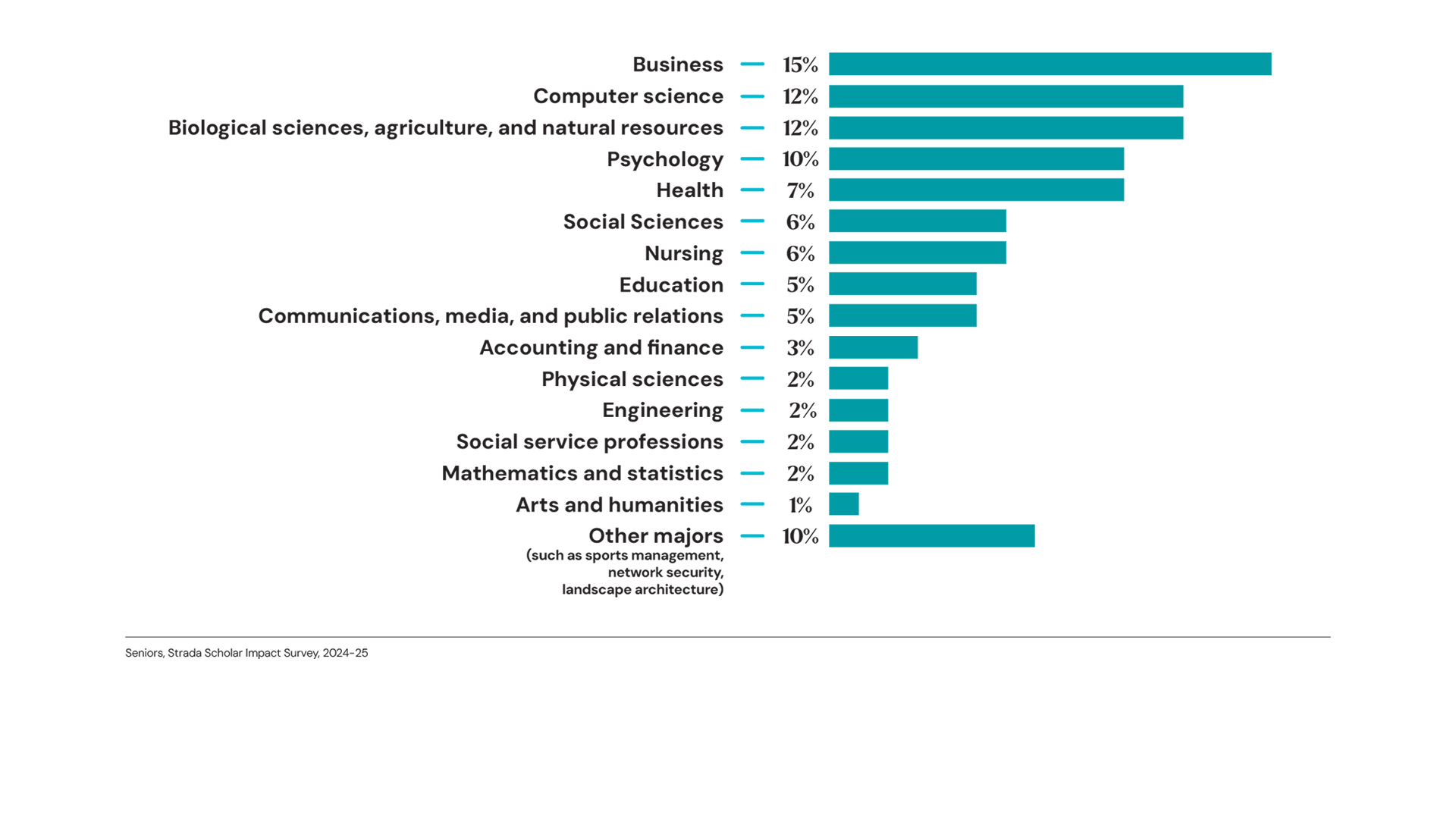
Where Strada Scholars are from
of Strada Scholars attend a college or university within their home state.
of Strada Scholars attend a college or university outside their home state.


of Strada Scholars are international students.

AFFORDABILITY
200-plus graduates and counting
More than 200 Strada Scholars have earned a college degree since the launch of the HBCU Initiative, with more than 100 graduates in the Class of 2025 and another 100-plus in the Class of 2026. According to the 2024-25 Strada Scholar Impact Survey, 97 percent of Strada Scholars say the scholarship was critical to funding their education.

From a dream to a degree
Strada Scholar Tyler Hunter, a junior at Fort Valley State University, is an accounting major.
Tyler Hunter's journey to college began with uncertainty.
Like many prospective students, Hunter questioned whether higher education was possible for him — not because he lacked the drive or ability, but because the financial obstacles seemed insurmountable.
The idea that his journey to a degree would end before it had even begun changed through a chance encounter with Barcado Styles, director of civic engagement and career development at Fort Valley State University. She introduced him to the Strada Scholars program, which provided the financial support Hunter initially needed to enroll and also provided stability throughout his academic journey.
As a Strada Scholar, Hunter could focus on studying and developing as a leader rather than worrying about making ends meet.
Hunter, an accounting major at Fort Valley State, took part in a financial literacy training and career exposure program and gained crucial financial literacy skills, learning about credit management and homeownership. He also gained something else: a passion for helping others by passing on what he has learned.
Today, Hunter is a student trainer in the financial literacy program and plans to intern in summer 2026 with an Atlanta-based certified public accountant he met through a contact made at the 2025 HBCU Leadership Summit.
“I want to continue promoting financial literacy by creating or supporting programs that teach people, especially students, how to manage money, budget, and make smart financial decisions,” Hunter said. “Ultimately, my goal is to use these skills to make financial education more accessible and affordable for everyone.”

QUALITY COACHING
Ensuring education-to-career guidance for Strada Scholars
For most students, a good coach is a game-changer.
Strada research shows that recent graduates who experienced quality education-to-career coaching are more likely to report their first job required a college degree, and are more likely to report that their education had a positive impact on their well-being and helped them to achieve their goals.
Yet nationwide, only 1 in 5 students at four-year colleges and universities and fewer than 1 in 4 students at two-year institutions currently receive quality education-to-career guidance. The HBCU partners engaged in the HBCU Initiative prioritize the elements of education-to-career coaching that experts agree comprise a quality coaching experience: timely labor market information, personalized guidance, and support in overcoming obstacles.
Career coaching for Strada Scholars

received information about job opportunities their degree programs could lead to.
received information about potential earnings in different careers related to their degree program.

received personalized coaching or guidance from an advisor.
“The support I have makes me feel like I’m not alone in my journey. I have someone in my corner I can trust and go to when I feel stuck or worry about my future.”
— Saniya, Class of 2026 Strada Scholar, Elizabeth City State University
Finding her strengths — and helping others find theirs
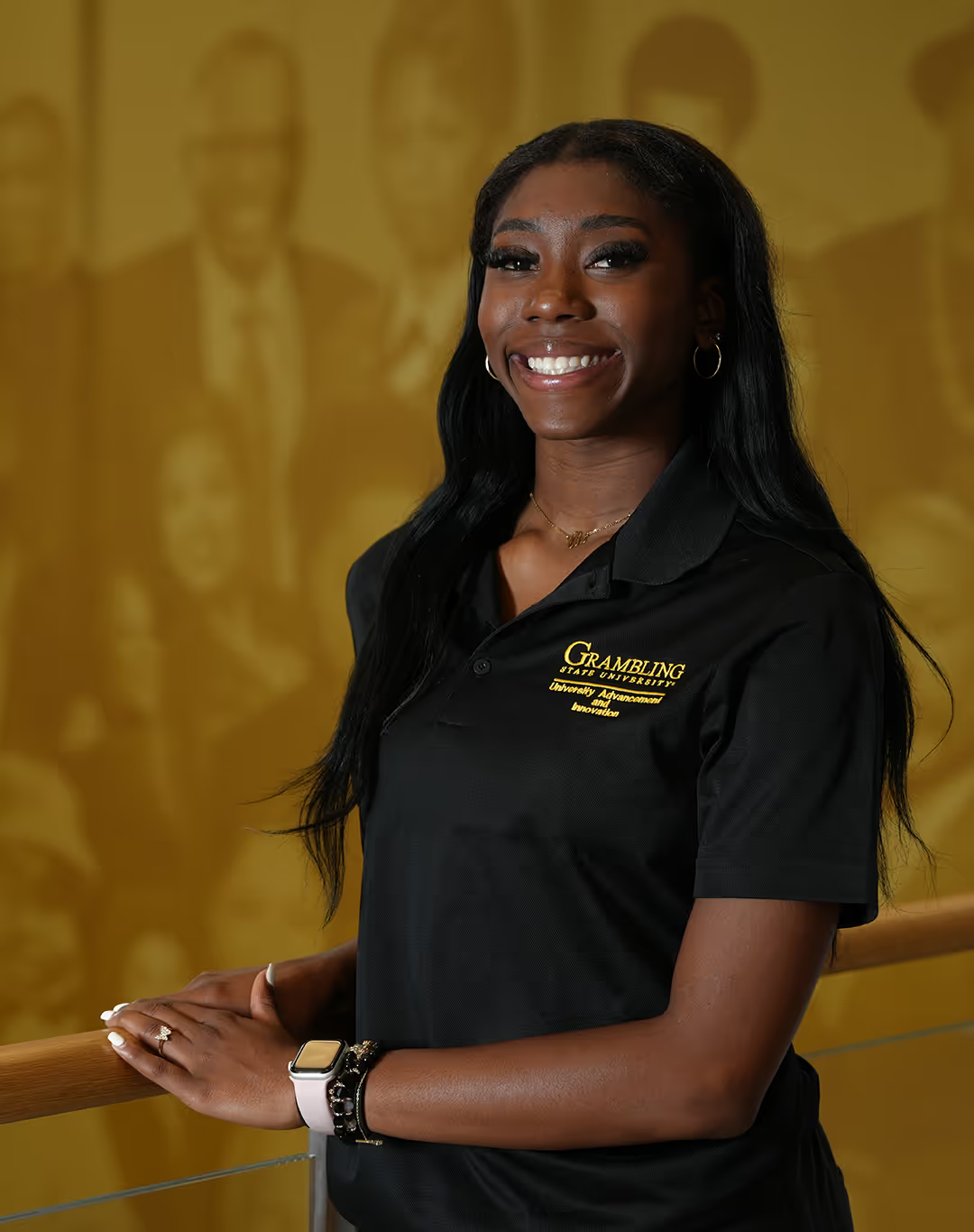
Strada Scholar Arianna Mosley is a kinesiology major at Grambling State University.
When Arianna Mosley arrived at Grambling State University as a kinesiology major, she had career aspirations but lacked the language to verbalize her strengths. Today she is a certified CliftonStrengths coach and Strada Scholar and helps other students find their voice, a transformation made possible through the comprehensive coaching model at the heart of the HBCU Initiative.
After discovering her top five strengths — competition, significance, achiever, focus, and context — she gained clarity about her career path and leadership style. Now she guides peers through the same self-discovery process that changed her trajectory.
Antoinette Livingston, director of the Grambling State Center for Career and Professional Development, deliberately selected Strada Scholars who were "students who are growing," not those who already had arrived.
Livingston frames this coaching approach as essential for equity: “Teaching our students their inherent strengths and coupling that with a strong understanding of the labor market and high-quality academics is how we begin to level the playing field,” she said.
Rather than focusing on deficits, the coaching model builds on what students already possess — their natural talents — and teaches them to leverage these strengths professionally.
WORK-BASED LEARNING
Making internships possible for Strada Scholars
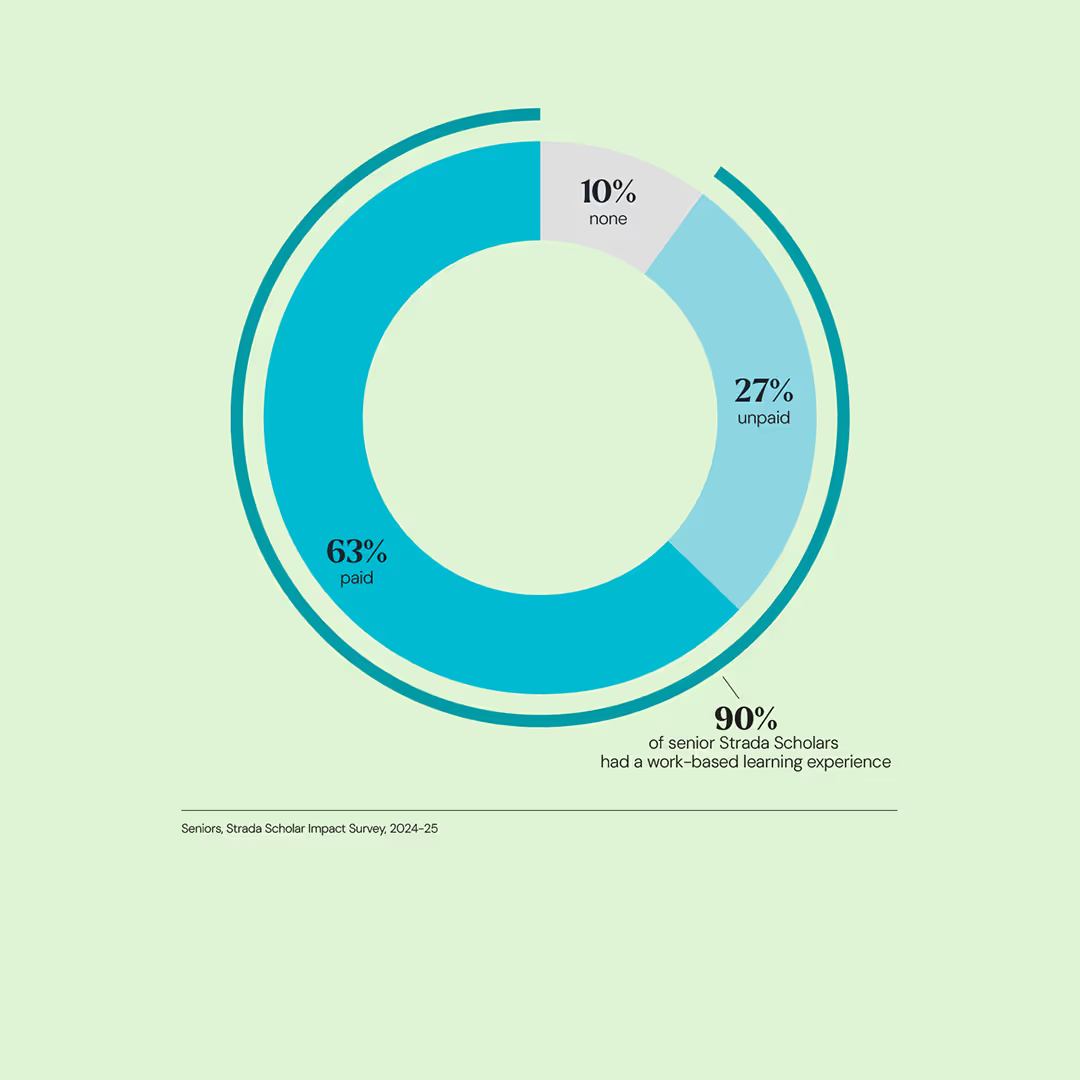
Work-based learning opportunities, especially paid internships, are one of the most promising strategies for ensuring students secure a first job that requires a degree. The problem: These opportunities remain too scarce.
Nationwide, while 70 percent of first-year college students say they want a paid internship, only 37 percent of seniors have completed one.
The HBCU Initiative emphasizes paid internships and helps students build the connections that open doors to them. As a result, senior Strada Scholars are 70 percent more likely than the national average to complete a paid internship.

College as a professional launchpad
Strada Scholar Adejuwan Balogun is a computer science major at Fayetteville State University.
When Adejuwan Balogun entered Fayetteville State University as a computer science major, he knew theoretical knowledge wouldn't be enough. What he didn't expect was how the Strada Scholars program would transform his college experience into a launchpad for professional success — opening doors for him to participate in hands-on workshops with leading companies and serve as a FedEx-HBCU student ambassador, which provides leadership training and career-building experiences within FedEx.
His experience exemplifies how Fayetteville State, through the HBCU Initiative, is priotizing work-based learning for Black students who historically face significant barriers to career exposure. Fayetteville State’s innovative approach addresses this critical exposure gap that can challenge students in their transition from college to career.
“I wanted students who were open to student leadership development, and I wanted to see greatness in them that they just were too shy sometimes to see in themselves,” said SeQuenna Pennix, the program coordinator who selects and guides Strada Scholars at Fayetteville State. Her vision extends beyond traditional internships to create diverse pathways for professional exploration.
Take Jalen McAllister-Smith, a sociology major preparing for a career in higher education administration. Through the program, he works directly with Fayetteville State student affairs leadership, attending meetings and learning about daily operational challenges.
Students such as Kihyira Jones, whose career path evolved during college, especially benefit from the exposure to diverse career paths. Jones began her college journey as a biology major, and internships at the University of North Carolina and East Carolina University — where she assisted with research on heat stress and structural racism’s impact on hypertension — revealed a passion for public health advocacy. "I now feel called to be a voice for those who are often unheard," she said.
LEADERSHIP DEVELOPMENT
Inspiration, information, and innovation
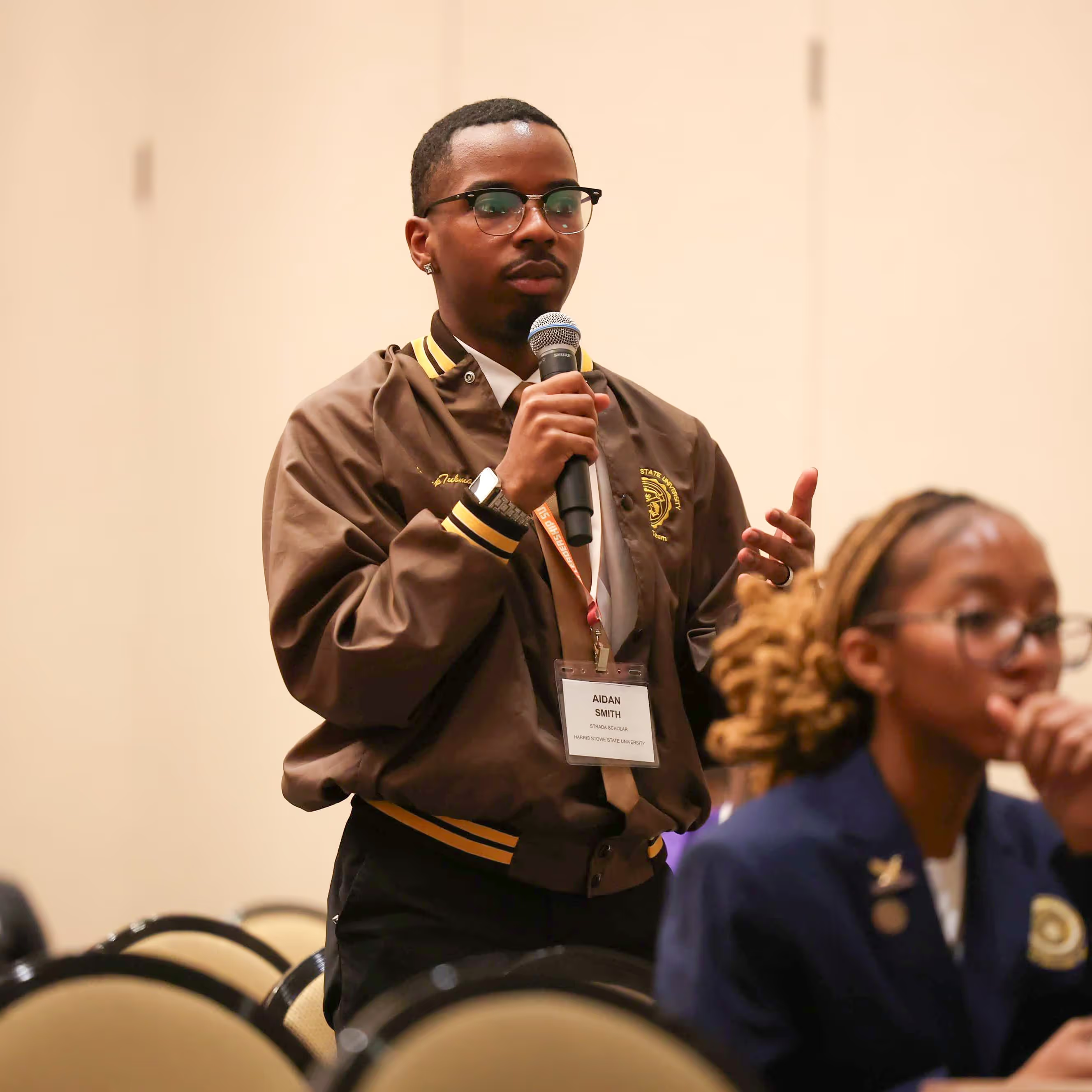
At HBCU Leadership Summits, students learn from professionals and one another.
Career panels. Networking opportunities. Inspiring messages from prominent HBCU graduates.
From the earliest days of the HBCU Initiative, the Strada HBCU Leadership Summit was envisioned as an experience that pulls together the community of HBCU students, presidents, chancellors, industry leaders, and mentors who are eager to support the next generation of talent and leaders.
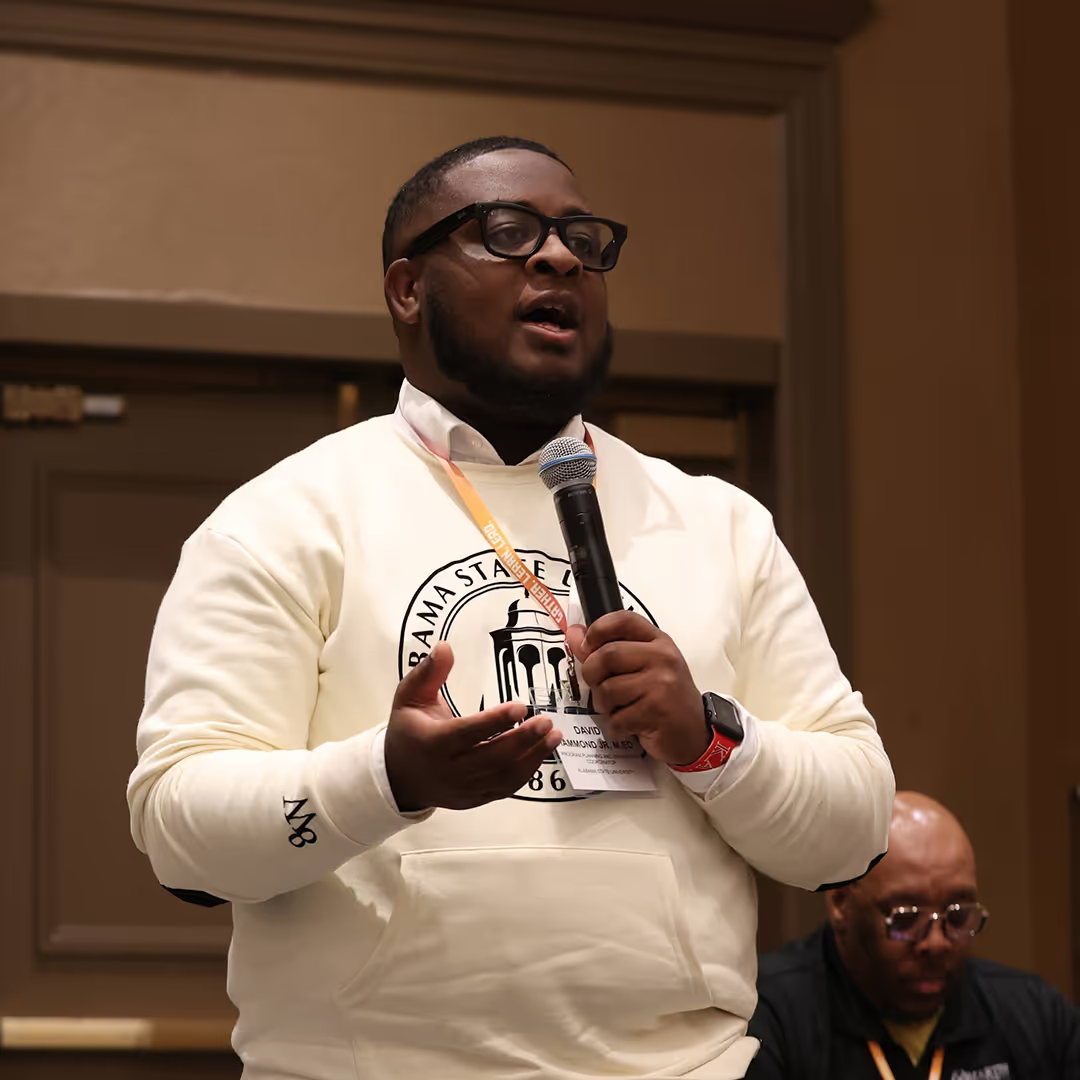
Across breakout sessions, panels, and informal exchanges with peers from other partner HBCUs, students engaged in rich conversations about career planning, financial growth, and life after graduation. Subject matter experts and young professionals across various career fields shared both strategic insights and personal advice.
The third iteration of the Summit, which took place in March 2025 in Dallas, brought together more than 400 Strada Scholars. The itinerary included a milestone: a celebration for the first graduating class of Strada Scholars.
In an address to attendees at the 2025 gathering, Strada President and CEO Stephen Moret reaffirmed the organization’s belief in HBCUs as engines of social mobility that produce trailblazers across countless fields.
“HBCUs represent an integral link between college and career for hundreds of thousands of Americans,” Moret said in his address on the Summit’s opening day. “Strada is proud to partner with each of your institutions, and those partnerships are a fundamental part of our work and key to our success.”
Next steps for Strada Scholars
Members of the first graduating classes of Strada Scholars are just beginning their postgraduate journeys and making their first decisions about life after college. These data, collected in fall 2025, represent the future plans of Strada Scholars in the Class of 2026.
plan to enroll in a graduate or professional degree program.
plan to enter the workforce.
are still deciding.
have other plans, such as entering the military or completing a professional licensing program.
“The initiative has made an impact on my career plans by helping solidify my goals and helping me be confident in applying for graduate school.”
— Layla, Class of 2026 Strada Scholar, Claflin University

“Upon graduation, I will begin my career with a Fortune 500 company. This initiative empowered me to envision and achieve greater possibilities, ultimately preparing me to transition seamlessly from the classroom to the corporate world with confidence and purpose.”
— Joshua, Class of 2026 Strada Scholar, Claflin University

Working with 47 partner HBCUs across the country, the HBCU Initiative amplifies and supports the existing work of these anchor institutions.