Scaling Work-Based Learning: A Framework for Effective Employer Intermediaries

Work-based learning experiences, including internships, co-ops, and apprenticeships, provide employers with access to emerging talent and allow learners to build valuable skills through hands-on work. These experiences are increasingly of interest to both K-12 and postsecondary education systems as they strengthen individuals’ ties to the labor market, helping to prevent underemployment and unemployment, and are critical to building a workforce that can drive a globally competitive economy.
Yet the U.S. has failed to systematically invest in work-based learning opportunities. In 2023, an estimated 8.2 million learners sought internships, though only 44 percent of them found one. Even fewer — just 30 percent — had work-based learning experiences that included clarity, supervision, and skill development. Employers often want to offer work-based learning programs but face barriers such as limited staff to manage programs and supervise learners, difficulty designing programs, challenges finding qualified candidates, and obstacles complying with labor laws and rules governing internships and apprenticeships.
Grappling with these significant barriers for employers — and ultimately unlocking them — is critical to enabling millions more learners to experience the benefits of work-based learning.
The role of employer intermediaries in work-based learning
Employer intermediaries can play a vital role in addressing these challenges. These organizations fill the gaps that exist between industry and the education/workforce system, and provide specialized capacity to help employers launch, scale, and implement work-based learning programs. Intermediaries play a critical role in supporting work-based learning within businesses of all sizes, especially small and medium-sized companies, which often lack the resources to develop work-based learning programs on their own, yet account for most new job growth.
Framework for Effective Employer Intermediaries
In 2025, an action group of intermediary organization leaders, researchers, and policy experts came together to define and guide the practice of employer intermediaries in order to grow work-based learning opportunities. The new Framework for Effective Employer Intermediaries defines employer intermediaries not by organization type but rather by the functions they perform to help employers design, implement, and scale work-based learning programs. In addition to the framework itself, the action group experts worked together to identify and define five key functions of employer intermediaries that support work-based learning:
- Employer engagement — Cultivating relationships with employers to understand their talent challenges and build buy-in for work-based learning as a viable talent solution.
- Solutions design — Involving and representing employers in designing and negotiating talent solutions with learning providers that address employer needs and expand opportunities for learners.
- Solutions brokering — Connecting employers with the right partners to grow talent pipelines.
- Implementation support — Helping employers adopt and sustain work-based learning programming that yields lasting impact.
- Administrative support — Simplifying processes for employers related to work-based learning administration and funding.
Learn more:
Partner organizations that endorse the Framework
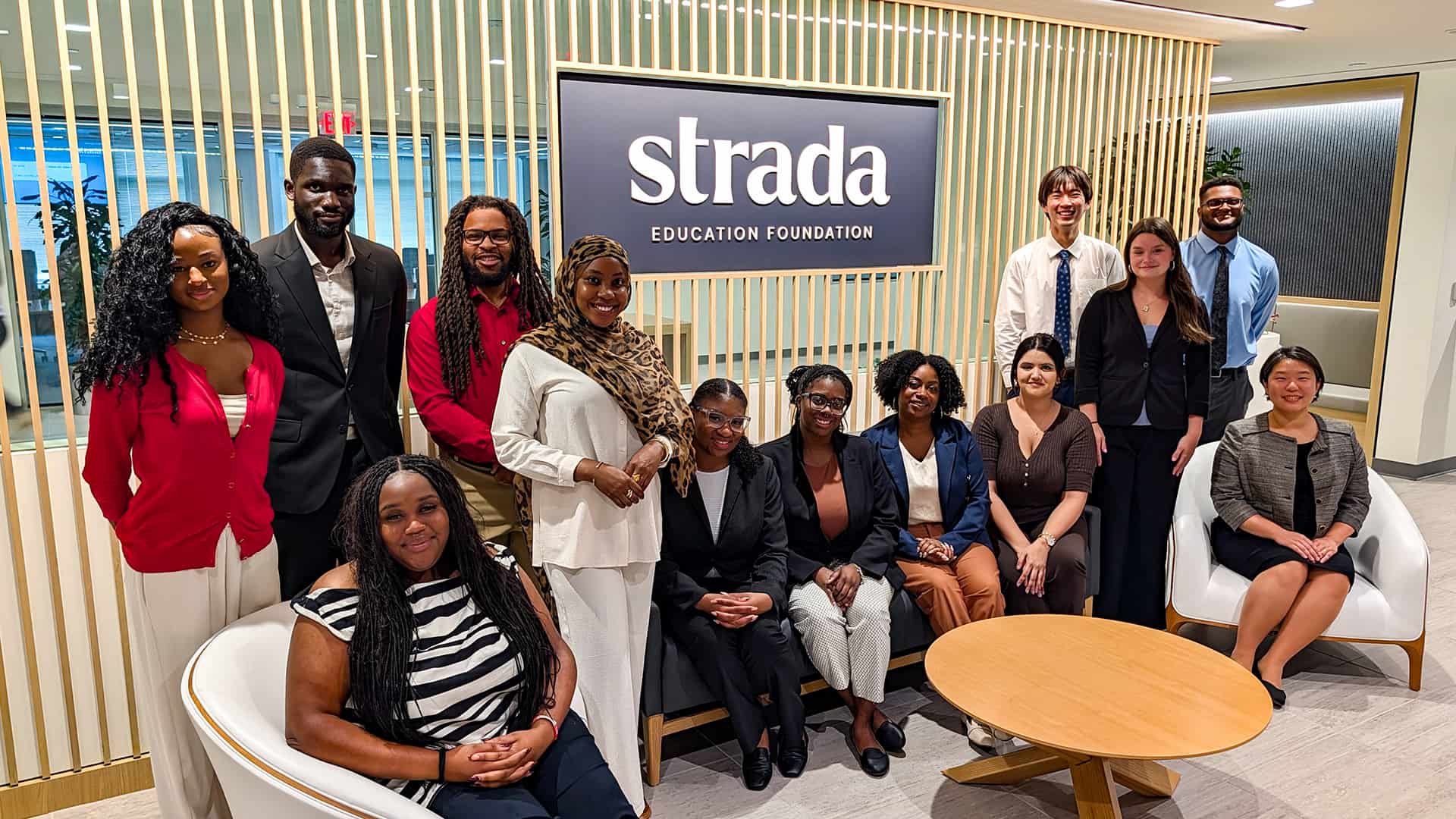
The summer 2026 Strada Education Foundation interns were exposed to the work of a national nonprofit while building skills for their future careers.
.jpg)
At a State Higher Education Executive Officers Association convening in Washington, D.C., delegations of state leaders exchanged policy developments on work-based learning evidence and solutions.

A new Strada grant aims to test and support the effectiveness of employer intermediaries, which can fill a critical gap between the learners and employers.
%20copy.jpg)
In light of what the State Opportunity Index reveals about progress in individual states and nationally, panelists will highlight practical strategies that all who seek to connect education to opportunity can apply to their work.
.jpg)
Work-based learning is linked to better early career outcomes, including higher earnings and greater likelihood of securing college-level employment. As part of the 2025 State Opportunity Index, states were benchmarked using student-reported participation in at least one of five types of paid work-based learning at public two- and four-year institutions: internships, apprenticeships, co-ops, practica, and undergraduate research experiences.

As Strada’s eight-year investment in historically Black colleges and universities reaches its halfway point, the partner institutions and students involved reflect on how it helps students connect their education to economic opportunity.
.jpg)
In partnership with Strada, an action group of intermediary organization leaders, researchers, and policy experts came together in 2025 to define and guide the practice of employer intermediaries in order to grow work-based learning opportunities.

This report provides actionable guidance for talent acquisition, learning and development, human resources, and workforce strategy leaders. It is designed for employers who already see internships as valuable, but who are seeking clearer frameworks, stronger alignment to business priorities, and more consistent ways to articulate and measure program value.
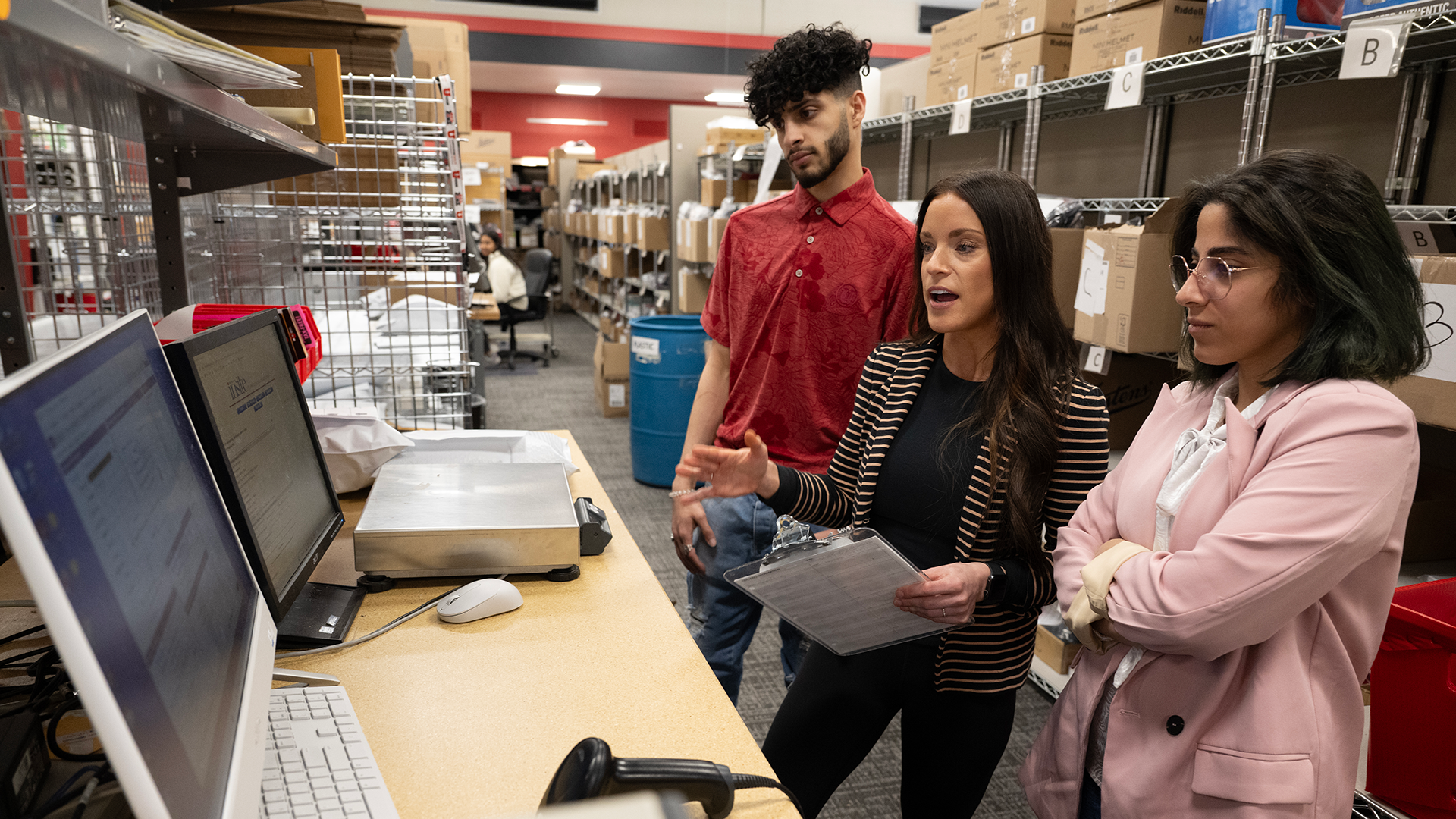
The practice of learning on the job has been around for centuries, but its capacity to prepare learners for the workforce and expose businesses to emerging talent is generating modern excitement.

Large-scale systems-level change requires sustained attention and dedication, so when Strada looks back at progress made over the past year, we are inspired by moments that point toward a future in which every person — no matter where they start — can envision a way ahead that is filled with opportunity.

While overseeing the organization’s portfolio of affiliates, Cobert also leads multiyear partnerships with mission-aligned nonprofit organizations.

More than 300 education and industry leaders from 36 U.S. states came together to learn from one another about how states are connecting education after high school with economic opportunity.
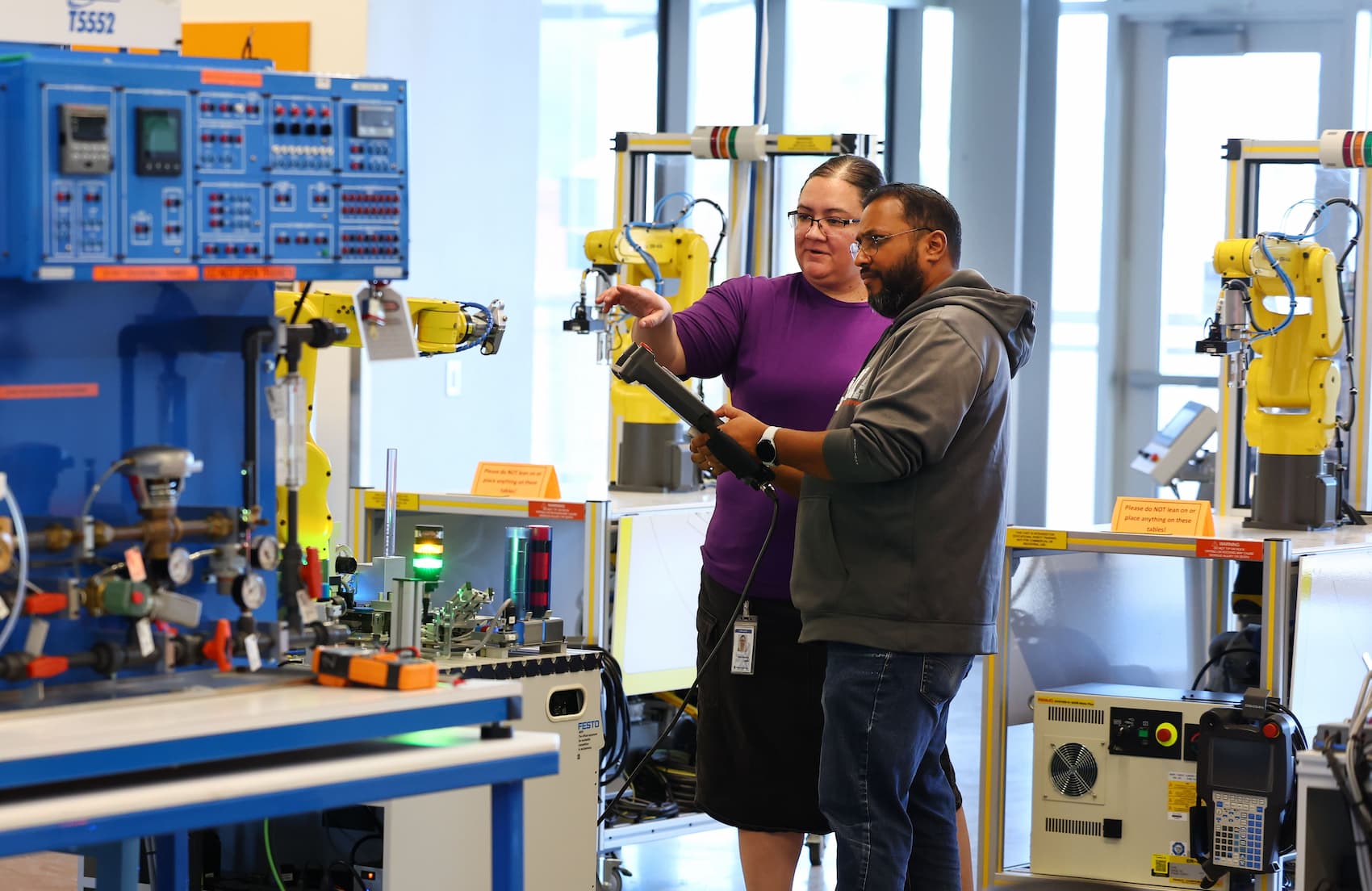
A recently released Strada report analyzed survey data from seniors enrolled at public four-year universities and colleges about a portion of the universe of work-based learning experiences.
.jpg)
The components are industry leaders that have the skilled workers they need, education and training providers that understand employers’ needs, and strong collaboration between those employers and educators.

One of the most promising strategies for helping students connect their education to career opportunities is giving students the opportunity to participate in off-campus learning experiences that are aligned with their field of study. Unfortunately, these work-based learning experiences remain too scarce.
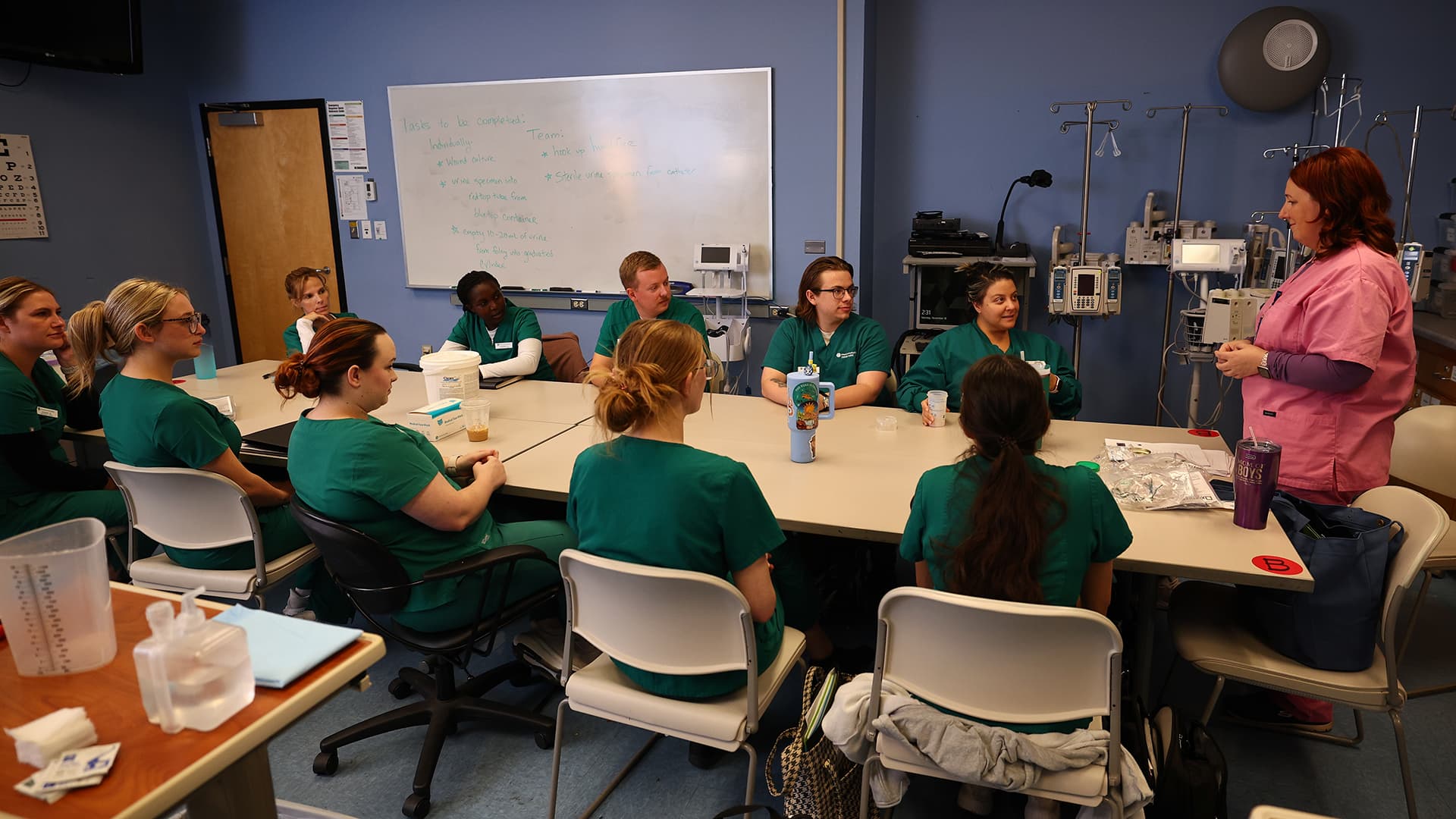
For learners, work-based learning improves access to a network, skills, and real-life work scenarios. For employers, it lowers the cost to hire and increases retention.

A new Roadtrip Nation documentary, “Rethinking Higher Ed,” asks: What is required to ensure the path provides the most value for each person? Where do students find guidance as they chose their path? How can we be sure every learner has a guide?

This year the Strada HBCU Initiative celebrates its fourth year — a milestone that includes the graduation of many students in the first cohort of Strada Scholars.

One year after its release, Strada CEO and President Stephen Moret reflects on what has been learned so far and what to expect in the next iteration.

Strada is extending an invitation for each institution to participate in the State Opportunity Index survey and to receive confidential and benchmarked results, free of cost.
.avif)
Even though internships impart a strong labor market advantage that tends to persist after graduation, the nation’s supply of internships has not kept up with demand. A new report provides insights.
.avif)
Strada’s agenda lays out ambitious steps for improving education and employment systems so students realize the economic value of their education and employers have the talent they need to fill jobs.

The Building Better Internships report looks at the latest findings from the National Survey of College Internships, a survey developed by the University of Wisconsin-Madison’s Center for Research on College-Workforce Transitions.

Both Robinson and Love will support the foundation’s efforts to conduct research and develop policy solutions.

Through the Arizona State-led Work+Collective, more than a dozen institutions are injecting mentorship and career development skills into students’ employment.

Applied connections between education and work are increasingly a part of undergraduate education in the United States.

The foundation’s president and CEO and former chancellor of the California Community Colleges explored a Strada report that captures factors that motivated recent alumni to enroll in community college.
Three-year grants awarded to four institutions will support the expansion of programs designed to help learners succeed during and after completion of their degree or credential.
The two-year grants will support proven partnerships that connect learners to education and in-demand employment opportunities and strengthen regional economies.
A new study from Strada reveals a silver lining at a challenging time in the employment world.
As the U.S. faces a dramatic period of job turnover, economic uncertainty, and postsecondary enrollment declines, employers and educators seek to find ways to meet rapidly changing education and workforce needs.
Phase 2 allows Taskforce on Higher Education and Opportunity members to seek up to $1.5 million ($6.25 million total) to expand efforts to connect education to employment.
Disparities in securing paid internships persist for women, people of color, first-generation college students, and students with low incomes — even when taking into account their fields of study.
Strada announces the winners in the initial phase of a grant challenge aimed at helping higher education institutions improve career and life opportunities for several disadvantaged populations.
The recognized economic and workforce development leader with successful tenures in Virginia and Louisiana will join the national nonprofit in January 2022.
The grant competition seeks to connect learning with employment for first-generation students, those who struggle to afford education, and students of color.