News & Insights
The analyses in this report explore variations in experiences across student populations and fields of study; the sources and channels through which students experience education-to-career guidance; and how quality coaching experiences are linked to student perceptions about other aspects of their education.
By providing insight into employment opportunities, earnings, and workforce demand, labor market information helps students understand how educational pathways most consistently connect to career outcomes. This qualitative research is based on in-depth qualitative interviews with career services professionals and undergraduate students.

.jpg)
The analyses in this report explore variations in experiences across student populations and fields of study; the sources and channels through which students experience education-to-career guidance; and how quality coaching experiences are linked to student perceptions about other aspects of their education.
By providing insight into employment opportunities, earnings, and workforce demand, labor market information helps students understand how educational pathways most consistently connect to career outcomes. This qualitative research is based on in-depth qualitative interviews with career services professionals and undergraduate students.

These five resources were developed to provide a summary of the research behind each of the five Principles for Quality Education-to-Career Guidance.
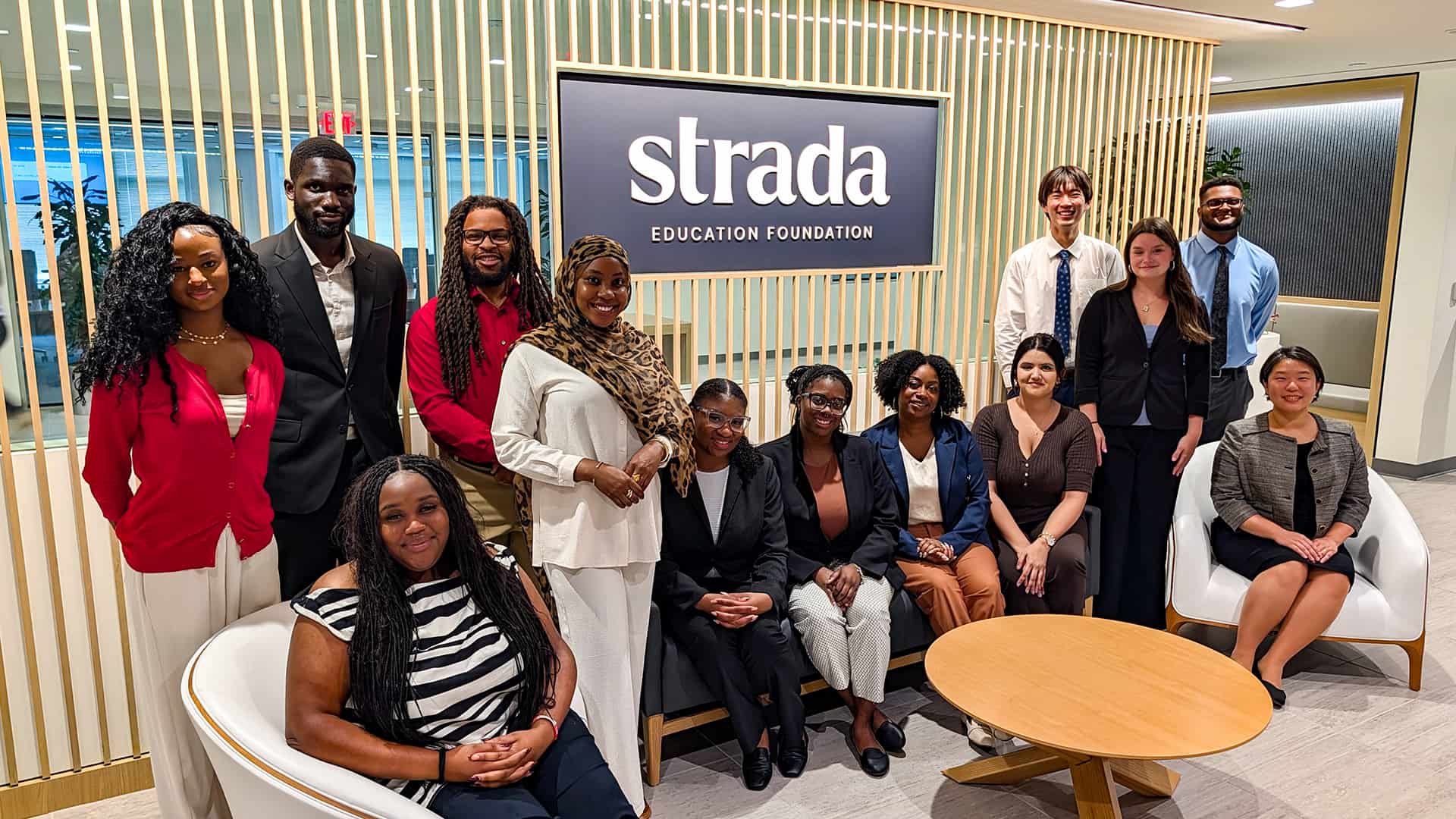
The summer 2026 Strada Education Foundation interns were exposed to the work of a national nonprofit while building skills for their future careers.
At a State Higher Education Executive Officers Association convening in Washington, D.C., delegations of state leaders exchanged policy developments on work-based learning evidence and solutions.

Where does a state’s college-educated talent come from? Where do new grads go after commencement is over? A visual story about the migration patterns of working-age adults with college degrees.

A new Strada Institute for the Future of Work report shows how different states build college-educated talent pools, either by relying on their own high schools and universities or attracting talent from out of state.

Talent in Motion investigates interstate migration patterns of working-age adults with a bachelor’s or graduate degree and examines how these patterns differ by state, type of institution attended, level of educational attainment, major, occupation, and worker characteristics.

Individuals need control over their postsecondary education and employment records to navigate lifelong pathways across multiple educational experiences and careers.

The debate over whether college is worth it tends to swing between two familiar claims: that bachelor’s degrees lead to strong earnings gains and that too many graduates struggle to find good jobs. But how can both be true? These contradictory claims exist because the benefits of higher education are usually calculated either on average or for the median student.
Founded in 2018 by universities in North America and Europe, DCC was created to build a shared infrastructure for issuing, storing, displaying, and verifying digital credentials.
A new Strada grant aims to test and support the effectiveness of employer intermediaries, which can fill a critical gap between the learners and employers.
Try a different search term or refine your filter selections.
Stories
The summer 2026 Strada Education Foundation interns were exposed to the work of a national nonprofit while building skills for their future careers.
At a State Higher Education Executive Officers Association convening in Washington, D.C., delegations of state leaders exchanged policy developments on work-based learning evidence and solutions.
Where does a state’s college-educated talent come from? Where do new grads go after commencement is over? A visual story about the migration patterns of working-age adults with college degrees.
Videos
%20copy.jpg)
In light of what the State Opportunity Index reveals about progress in individual states and nationally, panelists will highlight practical strategies that all who seek to connect education to opportunity can apply to their work.
