Webinar | Putting Education to Work: How States Are Connecting College to Careers
%20copy.jpg)
Go to college, get a good job, strengthen your community, pass it on — it works for many, but not enough. State leaders feel the urgent need for solutions that ensure strong connections between education after high school and economic opportunity for every student, especially those who face the greatest barriers.
In light of what the State Opportunity Index reveals about progress in individual states and nationally, panelists highlight practical strategies that all who seek to connect education to opportunity can apply to their work. The discussion also includes an insider's view into how the cross-sector leaders in Louisiana are bringing their aspirations for education and workforce alignment to life through a combination of partnerships, programs, and legislation.
- Ruth Watkins, President, postsecondary education, Strada Education Foundation
Panelists:
- Cruz Cassard, Student, Nicholls State University
- Rick Edmonds, State senator, Louisiana
- Barry Erwin, Chief policy officer, Leaders for a Better Louisiana
- Kim Hunter Reed, Commissioner of Higher Education, Louisiana
- Ted Mitchell, President, American Council on Education
Ruth Watkins (0:00): I want to say warmest welcome today. My name is Ruth Watkins. I work at Strada Education Foundation and am really delighted to be part of this conversation today to think about putting education to work, and particularly the role that states have and states and state leaders in relationship to their institutions. It's a pleasure to be able to spend some time with you and think about what students, families, and industries, as well as policymakers, are looking for in postsecondary education, and particularly that opportunity as it plays out in economic mobility, stability, meaningful, purposeful work.
Thank you for giving us that time and ideas and joining us today. I have wonderful folks with me that will be introduced to you as time progresses here this afternoon. We also welcome hearing from you. There's a couple of ways you can do that. We've held some time toward the end for questions and discussion, and invite you to raise those questions at any time through the question and answer function in your Zoom screen or through the chat.
So thank you for being an active part of this, and we look forward to hearing from you with examples and/or questions that you may have as well. Now I'm going to turn to my colleague Dave Clayton, who is a leading researcher at Strada and has been thinking a lot about the opportunity states have to lead the way now. Dave, take it away.
Dave Clayton (1:36): Thank you. Ruth. This, you know, we're so appreciative of this, but we have tried to do with the State Opportunity Index, is create a framework that integrates and looks at that intersection between education and training after high school and workforce economic development opportunity, opportunity for the individuals who invest their hopes, dreams and themselves in that postsecondary education training, but also opportunity for employers and economic development and policy makers, those who are stewards of our communities, the places we work and live and come together to improve our lives collectively and individually.
So at that intersection, we tried to identify what is our best contribution as a national nonprofit, as a philanthropy working in this space. We identified five components that we think are right, that connect, that best connect and most effectively with evidence and practice. Can connect education to opportunity for individuals. That became the genesis for the State Opportunity Index.
Those five things are not brand new, and they're not things that many of you haven't been doing in many ways over time, but putting them together in a framework is what we've done through the State Opportunity Index. And then to help states and leaders across the nation learn from one another, categorized each state's progress and development across those five dimensions, so that you can then learn from one another and say, “Oh, there's a strength here, there's something there. What's going on?”
We worked to facilitate that discussion and shared learning across peer networks, but also to help you make visible the work you're doing, both the successes as well as your aspirations for future progress. That, in short, is the State Opportunity Index that we release annually. I'll just give a quick kind of visual tour of what I've said.
Just to remind you that this is the 2025 report; we’ll be releasing the new report in November of 2026. So we're in the midst of data and analysis right now. Importantly, we just knew from the outset we were not the smartest people in the room. So we're so grateful for many of you, and certainly for this initial group of strategic and technical advisors who have helped us think about this framework. Then, how do you operationalize it and measure and put this to work in ways that are productive for people on the frontlines who want to do this work to serve students and improve their outcomes, connecting education to opportunity?
Again, here are those five dimensions. On the far left, Clear Outcomes really talks about the state data infrastructure, and resources to be able to look at those pathways through education into the workforce. If we want to improve it, let's understand what's happening and what's working and help make that visible and accessible to those who are making decisions based on those aspirations.
On the far right, we have Employer Alignment. This is very intentional that, as we look to blend that intersection between education after high school and economic opportunity, employers need to understand the supply demand, the talent pipelines. How does this match up regionally and across states and programs? What can I build on and what can I invest? Where can I partner, and what can we do together at a state level to create a context in which individuals can thrive and employers and enterprises can as well?
The three middle components or focus areas within the State Opportunity Index are really focused on evidence-based best practices for ensuring that students can – the first on the left, Quality Coaching – have the education-to-career guidance that allows them to be intentional and thoughtful about finding a path through education that fits their needs, interests, aspirations, but also where do they want to work and live. What are those other constraints and interests and priorities in their lives, and what's the path to that opportunity that they're pursuing?
Affordability is once you get that vision and that well-informed and connecting academic pursuits or training to a career that you are aspiring to, we can't let affordability be a barrier to individuals pursuing them where they have our scarce resources, human capital. So let's not let the financial capital stand in the way of those individuals and their hopes, dreams, talents, and contributions to the society we all share.
Then finally, Work-based Learning. Rather than waiting until after you've finished education training to then know what it's like to put it to work. Strong evidence that the earlier and in multiple ways that individuals are starting to experience that intersection between the skills, talents, abilities, knowledge that they're developing through their education and how it's applied and comes to life and what makes it valuable within the workplace, those things improve the outcomes, both retention, completion, and on into that launching careers rather than just landing a first job.
Those are the kind of elements of the State Opportunity Index. We'll talk about how those come to life today with some insights from Ted Mitchell, president of the American Council on Education, and several of our colleagues from Louisiana who've been on the frontlines of that this year.
Just to, again, visually remind you, we're not going to look at all of these. Each state is categorized across those five dimensions. You can see a range or a spectrum of where states are. We don't again need to go through all of these. You can find the reports, but you get that feel of the variation and the profile that you can see when you start to look apples to apples across states in these categories.
What do we see? What do we learn? How does that help us make progress? So, you can find all these things as you go and more detail about your specific state or about groups of individuals and subpopulations. But thank you for being with us today. Hopefully, that level sets a little bit and Ted will turn it to you, I think, really, you've been with us from the outset and that strategic advisory committee.
How does this meet the moment we're in for higher education and our economy and our nation, and what you observe as people are working to bring this to life? How is this framework helpful rather than just another ornament or a vanity project, but something that does work and helps us make progress? So, Ted, we'll turn it to you.
Ted Mitchell (8:28): Great, thanks. Thanks, Dave. When I worked in state government in California, we used to call what you're talking about shelf art. And so, the State Opportunity Index is decidedly not shelf art. It's a roadmap. It's a plan. We'll talk about that today. But I want to start a little bit with what we're finding.
For those of you who aren't familiar with the American Council on Education, we represent all two-year, four-year public and private institutions in the country. Which means that I have the privilege of working with the people whose hats I have behind me, who educate virtually every higher-education student in America.
When we look at what those institutions are hearing from their students, and from the families who send students to our institutions, we're hearing one word over and over again, and that's value. Our students, their families want to be sure that the institutions that are entrusting their kids with or themselves with are promoting and producing degrees and certificates of value.
We know that economic return is not the only way in which value in higher education is measured or matters, but it's pretty basic. If you want to build a life, if you want to build a family, if you want to build a community, if you want to build a state or a nation, you have to start with a vibrant economy, employment opportunities for people, and pathways for individuals to make their way from education into work.
That's what the State Opportunity Index represents. It represents, as Dave has said, the identification of five different important elements that will ensure that institutions of higher education are producing degrees and certificates of economic value. There are three stories to be told in the State Opportunity Index. The first story is how developed our state data systems are around these five pillars. Those of us who have experience in the state know that that's going to be something that's a real interest to commissioners, to transfers, to other people who are working in the state.
Second, and for those of you who were glancing really quickly at those maps, looking at your house, your state compared to the other states nearby, that's the second story. How well are states doing in comparison to peers? If that creates a little bit of competition, well, that's just dandy. It's one of the things that we hope will motivate state policymakers over time.
But the third story is a story that we will join together today to talk about, which is how these elements and the index can be combined within a state to create an integrated statewide talent plan that works toward creating degrees and certificates of value, to students wherever they are in the system.
What we have the opportunity to do today is to dive into how one state, the state of Louisiana, pulled together its senior leadership to create just such a plan. Louisiana is leading the nation in the development of a plan that's based on these standards. I couldn't be prouder of my friends in Louisiana.
My colleague of long standing Kim Hunter Reed, also Senator Rick Edmonds and policy director Barry Erwin and Cruz are going to be joining us to talk about the way that students have provided input to this plan. But as you can see from the people we’ll hear from this is truly a statewide agenda. Persistence, courage, creativity, leadership, all go into taking these five pillars and turning them into an operational plan.
The leaders in Louisiana have done just that and I couldn't be prouder on behalf of all of us in higher education, the work that you've done.
Ruth Watkins (12:56): Ted Mitchell, you're an amazing leader for America. We are grateful that you have been an advisor throughout this project and that you are continuing to be a champion for the work that states do, can do and the way states like Louisiana are leading forward, both for their state's benefit and good and for the institutions within them, and maybe most importantly, for the students and families that they serve and the industries that benefit from that talent. It's a fabulous segue way forward.
We have folks with us today from states as broad and diverse as Washington to Texas, to Arizona, to Colorado, to Illinois, to Minnesota. Let me see if I can keep going – to Maine, to many places like Mississippi. I'm trying to think of who I forgot. Kentucky is on this list of attendees today. Iowa. Pennsylvania. Thank you for being with us.
My guess is, exactly as Dave has popped into the chat, that you love to know where your state stands and most importantly for you to think about the strategy that you have deployed. Oh, Louisiana. Thank you for those who are – I was trying to work from memory. I appreciate the assist in the chat. The states that I didn't mention are popping up, so well done. Thank you for that.
Also, really know that our goal is to shine a light on examples and you all have them of strengths that you're leading from. We all have areas where we want to continue to strive for the good of our students, families, industries, and state well-being overall.
So, as you look and go to look at your own data, please do. Also know that we all stand ready to help and advise. That's really what we're doing today and exactly why we wanted to talk about Louisiana.
Louisiana has done some amazing things, and I have to say at the center of all of that amazing is a senator, Senator Rick Edmonds, who has been a long-standing leader in Louisiana and also is chair of education for the Senate and has had a long history as also a leader in finance for the state and other areas.
So this is an experienced voice and an incredible champion for Louisiana, Louisiana's students, Louisiana's industries, community, and ultimately, its people. And it's thriving. Senator Edmonds, I understand your Wi-Fi is a little spotty because, of course, you are hard at work today.
But we do want to hear a little bit about what you've done. You have done some amazing things representing District 6 and, that's areas around Baton Rouge, if I understand it, and also representing the state as a whole. Tell us a little bit about what you hoped to achieve when you decided to have a Senate concurrent resolution. You were the champion of that.
They got a lot of support to create a task force that brought together many leaders and voices from the state on career navigation. What was on your mind and what did you hope to achieve?
Sen. Rick Edmonds (16:25): All right. Good afternoon. Hope you got me on this thing. I've been in and out a couple times, so, thank you for having me today. I'm honored.
Let me just say how this all started. When I was elected, I was early on put on appropriations, but also on education. Louisiana was rated 50 in just about everything. There's not anything we could do but thank Mississippi if we were 49. That said, I'm sorry if I have an influence in here or anybody from Mississippi, I just mean that in a nice, friendly relationship.
But down the road, I had a conversation with Kim Hunter Reed, who came to my office one day. I'd like to take credit for all of this, but I'm going to give credit where credit's due. Kim came in and she said, “I got something to talk to you about that I think you might be interested in.”
I said, “Alright, what am I interested in?” She goes, “Well, I think you might want to do this next year.” I said, “OK, what is it?” She said, “Here's a fact. Forty percent of all of our college graduates, university graduates, those with high-end credentials, when they get their degrees, they all leave the state of Louisiana.”
I said, “Wait a minute. You need to tell me that again.” She said, “Well, 40 percent.” I said, “Kim, I'm not much of a mathematician, but 4 out of 10, that just won't work. We just can't do it.” It just really – Ruth, you asked what spurred me on to do this? That really cut to the heart.
I thought about all the hard work and tax dollars. I thought about all of our educators and all the resources we put in education. Rightfully so. And 4 out of 10, as soon as there's this great exodus in Louisiana, why in the world is this happening? So that started the ball rolling, and we started a task force that then brought forth higher ed people and business and industry people and legislators.
We just started and people like Strada that came alongside and said, “Let's just take a look at this and let's just dig deep and see what we can find out.” And so, that's how it all started. She said what I think what really would make the difference is if we have a career realignment, if we would start career realignment and make it as important in the institutions as graduation rates. You might not have said it exactly that way, but that's the way these ears heard it.
No offense to graduation rates – a wonderful thing to graduate, get degrees, and all the like. But how much more could we impact our families, cut down on the exodus, and place students in a place of success for generations to come? Well, that's what we started.
The long story short now is where we are is we've now advanced that ball, and we're now starting to line up our students when they walk through the door. The goal is walk a student through the door and say, “Here is industry's greatest needs in the state of Louisiana. Here's the kind of pay you can receive. Here's a kind of down-the-road advancements you can expect. Here's the hope for you and your family of extra things that you can do. Put all that together. You can have a great life. Don't leave Louisiana.”
That was sort of what was the impetus for that start point. And after a year's worth of cash for work and great leadership, here we are today.
I'm glad you're saying we are leading Louisiana and trying to lead the nation. That's our goal. We want to lead the nation. As we watch the stars align, here's what happened – when we opened that can up, workforce development came alongside and said, “Man, we're interested in that.” Economic development came along, said, “Wow, we're interested in that.”
Business and industries and think tanks said, “Well, you know what, we're interested in that. We want to make certain that all the stars are aligned. Let's do this.”
The governor's office came on board, the Department of Education came on board. I can't tell you anyone that has given us any opposition. This thing has flowed for the past year and a half; it's been as smooth as anything I've seen in 12 years.
So, anyway, that's sort of an intro. That's a long answer to a question we've invested ourselves in. But it is well worth the research and the work.
Ruth Watkins (20:33): Senator, that was perfect. I have to say, as an observer and supporter and maybe cheerleader to this effort in Louisiana, I have never seen anything quite like it.
I wanted to ask Senator Edmonds, kind of, what is this superpower? What are the keys to the success of this? Because this effort started, the meeting was, I believe, a year ago in July and already in the legislative cycle, Senate Bill 305 has moved forward and is now to be enacted August 1, if I understand it.
Sen. Rick Edmonds (21:07): That is correct.
Ruth Watkins (21:08): Finding that kind of information that you just highlighted is so key for individuals to make informed choices about what are those high-demand fields. How can I begin to make a choice that will work for me and my family, where I live and want to work, and ensure that I am well prepared to move into those areas and meet the needs of industries and support vibrancy in Louisiana's communities?
Sen. Rick Edmonds (21:35): Can I add just one little sidebar to that? What's happened is this economic development has come in, and now we have about $100 billion worth of investment coming into the state of Louisiana, and the No. 1 thing that businesses and industries are saying is, “We can't find the workforce; we've got to have more workforce.”
So this is perfect timing for us to say to our students, “Look at all the development that's coming. Here's great jobs. Let's line you up now, get you prepared, and success is just written all over your future.”
Ruth Watkins (22:08): Very, very powerful. Commissioner Hunter Reed, I'd like to turn to you. Commissioner Kim Hunter Reed leads Louisiana's higher education and Louisiana has an incredible leader in Commissioner Reed. So I want to turn to you and say you have served as a co-chair of this task force with your colleague, Secretary Susie Schowen, leading the workforce element. That in and of itself, I think, is a powerful element of enacting this vision. So, my compliments there.
Want to see how you would advise others in terms of what have been the keys to this success and how were you so successful getting various sectors, to participate across lots of sometimes difficult divides?
Kim Hunter Reed (23:01): Well, obviously, our secret wealth weapon already spoke, that being Senator Edmonds. He had a vision for bringing people together and wanted to make sure that everyone who needed to be at the table, decision-makers, were at the table.
He said to us, “You know, we can't just talk about talent development. We have to talk about talent retention in our state and what does that look like?” So the bottom line for us is we go before the legislators and he is a phenomenal Senate education chair.
We understand that the goalpost has moved and the definition of success has changed. We talk about credentials of value, skill building. We now, as my academic officers say, we have to talk about connections of value, employability. So success means that we have ownership in ensuring that students are career-connected, career-ready and employable, and that that experience is embedded into their full educational experience with us, not as a last-semester last thought, but a first-semester first thought.
It is a mindset shift for us. It's ownership. It's engagement. And a clear leader in our Senate are saying we can do better and we must do better. We can't be the talent pipeline for Texas. No offense to Texas. We love our Texas neighbors. We want the talent to be here in Louisiana.
Ruth Watkins (24:22): Yes, so well stated.
I think you make the point very clearly that this could only work with higher ed and workforce together, with the participation of policymakers, education leaders, K-12 forward and elements of the business community, and economic development, and partners and allies from communities, institutions, institutions involved, the perspective and voice of students, a remarkable cross-sector effort to bring forward the actions you would like to take and then successfully enacting legislation to support career navigation, core information tools about jobs, opportunities, and earnings.
Then you added something there about work-based learning, the importance for individuals to be able to see and experience career and opportunity prior to the very end of an experience, but in fact as part of what they do. So I'd love to hear you, Commissioner, talk a little bit more about how you see institutions, educational providers, the folks that guide and support students using these data, information, and dashboard as it begins to be built, is being built even as we speak. I suspect today the work is in progress.
How do you see institutions effectively using this and all the lives you want to touch being part of using these data?
Kim Hunter Reed (25:58): For us, you know, as the Board of Regents, we are a policy and advocacy agency. We don't graduate one student. So the rubber meets the road when the institutions really say, “We must own this work and we must understand what does high demand, high wage look like in our region of the state. How do we educate students for a lifelong opportunity, perhaps to create jobs, certainly to fill great jobs?”
Senator Edmonds asked me when we sat and talked about this resolution, “What will be the response of the institutions? I said, “They will respond. We collectively must own this responsibility.”
When the definition of success has changed, we recognize that that means we have to set people up for success. We have to inform our institutions and it's tactical things, Strada has supported us in grants to allow more academic programs to embed work-based learning and really to redesign programs, not a bolt on, but redesign programs around work-based learning. We use the Opportunity Index to look at, “Where are our challenges?” Your report said we need to work on work-based learning, employer engagement, and coaching.
So we've tried to lean into those spaces and say, “These are our deficits. Let's go there and let's figure it out.” Everyone's been at the table. We've had strong engagement at all of the task force meetings – employers, career alignment officers, career services individuals, systems, campuses. So it's an all-in approach. It is a departure point from what we do now.
I'm not going to say it's rose-colored easy glasses and an easy path, but it's critical to Ted's point about value. How do we ensure that we're adding value and return on investment? This is where we must be.
Ruth Watkins (27:51): So well said. I see a question has come in about engaging industries, maybe particularly tech companies, but all industries in this process and in this work because of course, work-based learning needs partners to help bring it to life.
This work and process needs the voice and perspective of industries, which is a great segue to our next panelist, Barry Erwin. Barry is the chief policy officer for Leaders for a Better Louisiana and, remarkable, I can say personally, advocate for the work that Commissioner Reed, Secretary Schowen and Senator Edmonds are leading. Barry was there pretty much every step of the way, from what I could tell, and mobilizing those around him leading forward for a better Louisiana.
Barry, let me pass to you and, I think we'll pick up that question somewhere in here about the particular engagement of industries and companies, which I think is a very important thread. But I think for you specifically right now, Barry, is, “Where do you see information about careers, availability, jobs, employment, and high-demand workforce, really helping Louisiana's industries to go forward and where do you see the work that we have to do to catalyze their involvement in this effort?”
So I'm going to pass to you, Barry. Oh, you might be on mute. So, Barry, we made you wait such a long time.
Barry Erwin (29:29): Apologies. No, thank you so very much. Appreciate it.
You know, for us, all of this is critical. I will say, on the work-based learning, we have started looking and, you know, just like others have in other countries and seen kind of the models that are taking place in Europe. We've had teams from our state going to London and actually another group is going back later in the summer to look at what other countries have been doing and just seeing what remarkable things they’re doing. Honestly, we're so far behind in those efforts from what they're doing there. But I think from us, it felt like the work-based learning is just a key and critical component.
The information piece that you talked about, I think is also critical. Honestly, in our state, the information about high-wage jobs and high-demand fields is out there. It's available, but only if you know where to go look for it. That's probably true in other states as well. If you know where to search, you can find it.
But we haven't done a great job yet, of connecting that to our workforce or to our citizens and to our students. So I think what you're seeing now in this effort is really, a really strategic effort to do that, too, with this task force, with the work we're doing with the dashboard to come as Dr. Reed said, trying to get into higher education now, with freshmen students.
We had that outmigration problem that Senator Edmonds talked about, which weighs very heavily on all of our minds, to know that actually, it's our most educated and skilled people that are actually the ones leaving the state and we're not attracting enough in. We have these opportunities, we have these jobs that are out there, and we feel like if we can get that information and connect them, while they're still in Louisiana, we think a lot of people want to stay, but they feel like they just have to leave. I think doing a better job, which I think is what we're doing now, of getting that out there, is going to help.
I will say this on a couple of other fronts. We've been really working on this work-based learning piece really over the last couple of years. Last year, we passed some legislation to enhance a work-based learning tax credit. A couple of them that had been very underutilized. They were on the books, but nobody was using them. We enhanced those and are trying to get those out there to employers so they're aware of that tax credit.
We also made some changes in our school accountability system, which really just kind of went in effect for this past prior school or past school year, that really enhance for school districts, for high schools, the points they can get toward their letter grades, for offering work-based learning opportunities and internships to their students.
Then we've done some other things. We have a work-based learning task force, which we just passed during this recent session, to kind of understand the work-based learning opportunities that are out there, because we don't really have a good lay of the land of what employers are offering and kind of provide a clearinghouse for that and maybe do some future work on that.
We've got several things going on on that front, which we've been teeing up. Hopefully we're going to see even better results, more results in the not-too-distant future.
Ruth Watkins (32:34): Thank you so much, Barry and all. I think there's a couple things I just remind everyone, please begin to direct and ask questions. As we've had the example, you can use the Q&A function that's on your Zoom screen at the bottom. You probably have to click on the More button with the dot-dot-dot to get it to come up. But please do that.
Then I love watching the chat with examples from your state about what's happening there and what you're bringing forward to meet the needs of your region and better serve students. So thank you for that.
I want to pick up on one thing for everyone who has spoken today – Dave, Ted, Commissioner Reed, Senator Edmonds and Barry, and representing Leaders for a Better Louisiana – everyone has talked about the importance of cross-sector, broad stakeholder participation to move this work forward. Sometimes I think we have made mistakes in that in higher ed in particular, not thinking from the beginning that people will be part of supporting things if they help create them and bring them to life.
It's very hard to secure that support when you bring people in the game later. I want to very much commend that approach in Louisiana and just ask all three of you for a rapid bit of, “If there's one thing you could tell people about how to secure that cross-sector involvement, what advice you might give?” I'm going to start with you, Barry, so we give you a chance to weigh in there.
Barry Erwin (34:14): I think it's the teamwork. I think you've heard that kind of expressed already. You have to have the right people in place. As it turns out, a lot of us have been working on a lot of these things together, not just this piece, but other things.
I mean, I think that's the key. If you don't have that team, then I think the thing to do is go out and build that team. I think that's what makes a huge difference in terms of success.
Ruth Watkins (34:37): Great. Commissioner, is there anything you'd want to add there?
Kim Hunter Reed (34:41): You know, Louisiana is all about red beans and relationships. Barry is right. We have a shared vision. We have a shared commitment to the work. That allows us to come together and do hard things because the road is not always easy. But I think understanding the work, understanding the commitment of the work and not worry about who gets the credit, I think those type of deep relationships make a difference.
Ruth Watkins (35:06): Great. I don't know. Senator, is there anything you'd like to add on that?
Sen. Rick Edmonds (35:10): Well, there's no easy one-fix answer to this, but someone rightfully said everything rises and falls on leadership, and you got to start at the top. In your state, if your policymakers on there … You've got to get your governor, somebody from the administrative staff, or you got to get somebody like I did or fortunately came to me from, Board of Regents or even in the education area of K through 12, which were, by the way, working on all of that.
But it really takes each one of those to be willing to put that as a priority. It can't be just one thing. It's got to be one of the priorities. We have made this between economic development and workforce development and Board of Regents. We have made this one of the priorities, and you can tell the difference.
Ruth Watkins (35:59): That's great, thank you. So we have a comment in the chat that we can, on occasion, miss student voice. So I don't want to do that today. I want to … Cruz, I'm about to ask you to come off mute, so I'll give you just a little bit of warning because you're not totally prepared for that. But you too have been a participant in this work from the beginning.
When you think about your peer students, what are the most important questions students are asking today? What are students looking for in their postsecondary experience? I happen to know that you're at Nicholls State, and a student leader there. So you have a chance to talk to lots of students. What are they asking for? What are they seeking? What are they looking for?
Cruz Cassard (36:42): I think it's everything the commissioner and Senator Edmonds has already talked about and Barry as well. It's about value. I know there's a lot of questions right now about, “Is higher education worth it?” We need to find ways in order to inform students that, yes, it is worth it and it matters for our workforce.
A lot of times what I have students that come to me and we talk, it's always about affordability and what are the opportunities. I think that's the two driving questions that informs if this is worth the value and the time that it takes to put in. Luckily, I think that it is worth the value and the time that I get that it takes to put in and the results we've seen already of informing students, being transparent in the process, and that dashboard that's going to come out of it, we're so excited about that.
It's going to be a centralized place for all students to get an informed opinion about what they need, what they need to do to succeed, and to achieve that value.
Ruth Watkins (37:41): So well said. I think the students want to know where the jobs are, what they can expect as an outcome, and perhaps we could even go a little stronger and say, students deserve that. We owe that to people to tell them that not at the end of their experience, but before they choose and as they begin.
Commissioner, I saw you come off. I don't know if there's anything you'd like to add.
Kim Hunter Reed (38:05): I guess I did want to add one thing to that. So as we're thinking about taking the Strada Opportunity Index and creating the Louisiana index, through Senator Edmonds’ legislation he just passed, Cruz is one of the students who has volunteered to look at the beta test of the opportunity index to see if it is clear, if it really provides the kinds of answers that students need, if it's easy to navigate.
We're going to have a group of students look at the early function of it and the early development of the tool in the next few weeks. So that will give us an opportunity to make sure that we are meeting the mark, because the information has to be information that will be consumed by those students and that they see value in it. We're very excited about that opportunity.
Of course, Cruz has been a student leader who's on the task force, comes every time, and has testified in committee about the importance of making sure that the students receive quality information, good consumer information, to make good decisions about staying in our state and having employment opportunities here. So we are very proud of him as well.
Cruz Cassard (39:19): But also, Ruth, if I may, it also is about the people on the ground and through my work on the task force, it's always been about, “Let's talk about the career service directors.” We have some outstanding people on the front lines, from Mr. Craig Marinello at Southeastern to all the other career service directors. We always want to keep them in mind because they're the people that's going to tell us about the value and the opportunity that can come about in our state.
Ruth Watkins (39:44): That's fabulous and such good examples. I really want to commend Louisiana for one more crucial action, and that is involving students in the design of how this information that you are now tasked to develop and deliver, student perspective on how that can be most effective is so crucial to that working well. Then to Cruz's point, the engagement of those students’ trust and go-to for help with these tools and, the potential of train the trainer approaches to get all the Craig Marinellos of the state involved in this work, because that is how every student is touched and impacted. So well done, Louisiana yet again.
I want to start asking questions, they're coming up through the Q&A. So we now have some minutes dedicated here. Please bring your questions.
This one I'm going to send to you, Ted. And that is inspired people attending this webinar saying, “I love seeing what states are doing. I'm a leader in an institution. What's my role in this? How can I be involved and what can I do to make a difference? Because I'm with you here.”
For some reason, we cannot hear you, Ted. I don't know what happened.
Ted Mitchell (41:03): I pulled/pushed the wrong plug into the machine. Here we go.
It's a great question. I'm going to take it to mean institutions of higher education just for a moment. I think one of the things that's come through in the comments at the chat over time is that, someone said it really well, everybody has a role.
I think from an institutional perspective, creating the kind of community that Senator Edmonds was talking about. What's going on in the K-12 environment, who are the employers in the local area? Is there a community college next to my four-year institution or four-year institution next to my community college? Bringing together in microcosm exactly the kind of community that the Louisianans have been able to do at the statewide level is a great way to do it.
It's a great way to actually get things moving. It's a great way to impact students, and it's a great way to build some momentum that then legislators, the governors, the commissioner's office can take account of and start to transplant that into other micro regions around the state.
Ruth Watkins (42:10): Yes, very, very powerful. I see also popping up in the chat – thank you, Kimberly Sluis, for highlighting that report – lots of questions about the wide variety, what's quality in a work-based learning experience. This is where we begin to see how powerful and important institutions are, as well, in helping students who will benefit most, be sure that they can secure a work-based learning experience.
There are a lot of questions coming up today about work-based learning, in particular. I think we're long past the point of trying to convince people that work-based learning is crucial and unlocks value. Now, we're at the point of saying how? What defines quality? What do you mean by that? One of the elements that that report and others will show you is that pay is a powerful contributor to economic mobility.
Other elements of work-based learning of social network and capital and relationships and being able to do early exploration have value. There is a through line on influence on employment and earnings and particularly, thinking about that high-demand area. Then there's also, not everybody is getting equal access to those experiences.
So this helps shine a light on what institutions can do in terms of how students get the opportunity for work-based learning, how they're exposed, and what really makes a difference for people translating it into economic mobility. It does not make it an easy solve, but it makes it an imperative for all of us to think about how we do this.
Love seeing people's comments and ideas come in about work-based learning, in particular. And lots of questions about ideas that you all have for how we can get more of those great and powerful experiences to people. I think one of the hypotheses of Louisiana has been, first of all, we don't really have great baseline data on where we stand today.
So one thing we need to do is make this very clear. Where are we today on who is getting work-based learning in Louisiana and how our institutions are doing. I think in that theory, there might be a little bit of once we begin to put out a measure publicly, which is the vision of the legislation, that is an intervention to tell institutions this matters.
I think that's what you're up to in Louisiana. I'm wondering if there are other things you'd want to highlight, because there are so many questions about, “How can we make this more a part of what every student does?” There's some folks in the chat saying, “We're doing that. We've decided we're going to make it a part of a requirement. We're going to build it into our programs over time so that we have time to get this right.”
Other things anybody wants to add there about what you're seeing and what you're doing?
Kim Hunter Reed (45:11): Barry, do you want to talk about the employee survey, employee engagement there?
Barry Erwin (45:16): Yes, I'm happy to do that. Our group, our organization partnered with the Board of Regents recently and actually put together a survey for employers because I think that was part of the problem.
We didn't really have or don't have a really good sense of what's going out there with employers and what they're doing in terms of work-based learning, what their attitudes are, kind of what their obstacles. I mean, we hear things anecdotally. So we did develop a survey, which really it's only been out for a couple of weeks, so we're still kind of just getting the initial returns in.
But I would say from what I've seen, it's very encouraging. A lot of these came from small to medium-sized businesses, which is really good because we tend to think of large employers. But really in our state and probably most places, it's the small and medium-sized businesses are the ones that are the most that we have out there.
But the initial results are very positive. We're seeing that almost 80 percent of these do have some kind of a work-based learning opportunity for students, for college students in this case, and the vast majority of those are paid internships. So that is really great.
One of the other things that we're hearing is a majority of them are finding that the experiences are good, that the students that are coming to them are largely have some professional expertise coming into it. They've got the good knowledge foundation they need. I think they're saying 80 percent of those or something like that do, which is really good.
I think the more encouraging thing even is that they seem to be having good experiences as employers because, they're saying the vast majority of the students, after they finish their internships, they've improved in their skills. That's like a great win for the employer, but also for the students who are getting not just paid, but also a really learning experience. It's going to add to their value when they get into the workplace.
So, we're not seeing quite the same numbers in terms of high school internships, which is something that we are trying to work on with our accountability system, as I mentioned. Also the tax credits.
But, really, so far, I'm encouraged to hear that employers in our state are very open to it. I think as we get more information out to them about what we're doing on this front, and actually use some of the results of the survey, I think we'll see even greater participation, which is really encouraging to me.
Ruth Watkins (47:36): I agree, and I think you made a very key step when you had several employer groups and representatives as part of this career navigation task force, because that group got to help shape the work by saying, “Here's where our barriers and challenges are. How can you help from a higher ed standpoint?” They also got to look with you at the data and evidence about what difference it makes, and the very facts that you just highlighted there, Barry, and it is very true.
I saw there are some colleagues, I think, from the state of Indiana that are on this call today. There were also some questions about tax credits and work-based learning. I do not want to risk getting into territory where I don't exactly know what I'm talking about, so I'm going to wisely avoid that. But what I can tell you is, Indiana has some. It is a leader nationally, and so is Iowa. They're on this call as well and they might want to chime in on work-based learning.
Indiana has a program called Indiana EARN. And that does support partial – I think it's half – of the wages of a student intern through a state fund and a state investment that I think it's been quite powerful in helping defray some of the costs that it has directed to an employer.
To Berry's excellent point, states with a fairly significant rural geography, and maybe this is true in all states, 70 percent of Indiana's employers are small or medium-sized businesses. So when we highlight only the very large employers that have national internship programs, that's an important element. But it is definitely not the majority and not where the majority of Americans are.
So we have to think about incentives, barriers, supports, and intermediaries for those that are in that small to medium-size business area.
Dave Clayton (49:40): Ruth?
Ruth Watkins (49:41): Yes.
Dave Clayton (49:42): Last summer, Commissioner Hunter Reed and I were at the Education Commission of the States meeting. Geoffrey Landward is the commissioner in the state of Utah, talked about their Talent Ready Utah approach, where they have dollars available for grants to develop programs, but they require the applicants to bring both the postsecondary education provider, the institution, and the employer come together with employers making commitments to provide internship slots, as well as to participate in program development curriculum design. Those are contingent on bringing a partnership already to bear with dedicated promises or expectations of serving students as well.
I don't know, Kim, you've been on a listening tour amongst colleagues and peers across those kind of conversations. But it's really bubbling up in a lot of spots.
Kim Hunter Reed (50:38): Yes. I would add to that, you know, we're thinking about the small businesses, large, and rural businesses, but higher education employers as well. So Strada has introduced us to the idea of work study, to work-based learning programs. What does a rigorous work study experience look like? We also have on our list to develop a faculty playbook around work-based learning so that faculty have an opportunity to really think about, “What does work-based learning look like, not just for education or for nursing where are you required to do your residency in order to graduate? But what does it look like across every discipline?”
Those are two additional ideas around work study, and faculty engagement and faculty playbook that can also help to scale this kind of experience for all students.
Ruth Watkins (51:33): Thank you so much and great examples. I also want to say thank you to everyone who's popping in the chat examples that they've seen, have worked on, are bringing forward. Great things are happening in Louisiana and around the country, and you are helping bring those to life here. I am very, very grateful.
Dave, I'm going to turn back to you for just a minute. We have lots of folks saying, “Where can I get information about this? What about this? How do I understand this?”
What do you want to tell people about that?
Dave Clayton (52:05): I would like to tell you to email us. I'll put my email in the chat and let's do customer service and hand-to-hand connections. It's the power of relationships, which Senator Edmonds and many have talked about – red beans and relationships, I guess is the phrase. We'll see if we can import a little bit of that, as well as our website, where we can connect you to leaders that are specialized. We have teams with specialized expertise, position, and development eager to ride technical assistance and capacity building across each of those five dimensions of the State Opportunity index.
I'll put my email in there and we'll help broker connections and make sure they're relevant and helpful to you as well as the self-serve. Don't wait around; go find the website and chase stuff down. But, this for us is what our hope is: Can we help people see one another, see these issues, see how they fit together?
Again, a chat full of progress. We will be sending out the recording of this and some materials and follow-up to help facilitate our continuing engagement. One thing I would just say is we plan to do these throughout the year. We have the annual event where people are coming together in person in November. But if you have topics that you'd like to surface for these virtual gatherings, large and small, let us know about those as well.
Ruth Watkins (53:30): Thank you. Dave. What a privilege it is to support the good work that is happening around the country. You are all leading that work for it. And a delightful spotlight today on the state of Louisiana and the incredible things happening there, and all of you that are really helpfully chiming in with the examples that you've seen. Thank you for that.
I want to ask each panelist today – I might start with our Louisiana folks and then if Ted wants to chime in as we wrap up – as you look at this landscape and what you are trying to do, what is a piece of advice you might just, very quickly lightning round, offer to others that are trying to strengthen the tie between postsecondary education and opportunity for their students, their communities, their industries, their state?
Maybe Commissioner Reed, you should go first if you want to give folks one quick lightning round of advice.
Kim Hunter Reed (54:30): I will go with the Ted Mitchell quote. This is not a theoretical exercise. This is intentional design. So think about what you can intentionally get done that is tactical that will make a difference, whether it's labor market information, consumer information. Think about it in that way of a design-thinking exercise.
Ruth Watkins (54:48): Excellent. Senator, I want to ask you.
Sen. Rick Edmonds (54:52): I would say that as we started with the topic title, we ought to stay there. That is we're rethinking education. I think that means all the way up where maybe we haven't started early enough. We used to do career technical schools down in our high schools.
We're attempting now to tie together that same emphasis in our lower-school ages, all the way to our, in public, but also in our charter schools. We made some moves this session to do that as well. The interest level is high. So we start in our high schools and our below, start training our students. And again, I just didn't come up with the title, but I would say to me that means rethinking education.
The more we do that, the better success we will have. And find yourself a great team and start rethinking education.
Ruth Watkins (55:41): Awesome. Barry, do you want to chime in at all?
Barry Erwin (55:44): Yes, I would just say as a policy group, that's kind of largely funded by business, but not really a business organization, I still would say be sure to engage the business community. They are keys.
It's a partnership. We can do everything that we try to do in higher ed and in high schools, but we need the business partners to be a part of it. We think that they want to in Louisiana, but we need to be part of us. Our job is to get the information out to them and encourage them to do that so that they understand it’s a win-win, both for our students and actually for their businesses as well.
Ruth Watkins (56:18): Thank you. Now, Ted and Cruz, you both centered your comments on value, what people are seeking from postsecondary ed. Is there a bit of a word of advice as we wrap up today that you would like to send us off with?
Cruz Cassard (56:35): Yes, I mean I really have two, to be honest. One is never rule anything out. Sometimes the craziest ideas can create the best opportunity possible. So never rule anything out. Sometimes we have to reinvent the wheel. The other thing is always keep students first. You have to have students involved in conversations. We're the ones that you need buy-in from.
We’re ready, we want to talk to people. We want to share our perspectives. So keep students first and never rule anything out.
Ruth Watkins (57:03): Thank you. Ted?
Ted Mitchell (57:05): So I have two comments as well. First is, Cruz, let's talk about your postgraduation career hopes. We should stay in touch.
Cruz Cassard (57:15): Call me, call me.
Ruth Watkins (57:16): One of it is staying in Louisiana, though, Ted.
Cruz Cassard (57:19): Absolutely.
Kim Hunter Reed (57:20): I’m watching you, Ted Mitchell.
Ted Mitchell (57:23): OK, I'm a non-poacher. I'll move myself. So, the second is … maybe it's a little bit of a warning, but a hope. I think that we have this tendency in higher education to think about a certain set of disciplines leading to a certain set of careers. It's easy to focus on those and think about work-based learning.
The challenge I would leave everybody with is let's look at it the other way around. Let's look at all of the things we teach people. Let's identify those skills. Even at the level of faculty, let's start to connect those with the world of work.
This isn't just about the people who are in accounting and nursing. This is about the philosophers and the historians and the English majors; they deserve just that little bit of extra attention to do the translation of what they're learning to what they know.
Ruth Watkins (58:16): So very well said, because in fact, those may be the individuals that would both benefit most and the industries that would welcome and learn from that talent.
Sen. Rick Edmonds (58:27): Hey, excuse me, Ruth, I hate to interrupt, but a Louisiana guy's got to do it. He just lost himself a hat, by the way.
Ruth Watkins (58:36): If he tries to steal Cruz, it might be worse than a hat.
Ted Mitchell (58:43): I don't know. Cruz, we got to talk.
Ruth Watkins (58:48): Cruz has got a future in Louisiana and, frankly, wherever he wants to go, which is ultimately our goal for people over the course of their life.
But he's starting in Louisiana, that much I know.
Ted Mitchell (58:59): I've got a future with a Nicholls hat, I know.
Ruth Watkins (59:00): There you go.
Cruz Cassard (59:02): Go Colonels. Go Colonels.
Ruth Watkins (59:04): Well, let me say thank you to everyone who invested their time in this conversation today, inspiring to us all.
I look forward to seeing you all soon. And thank you for being with us today.
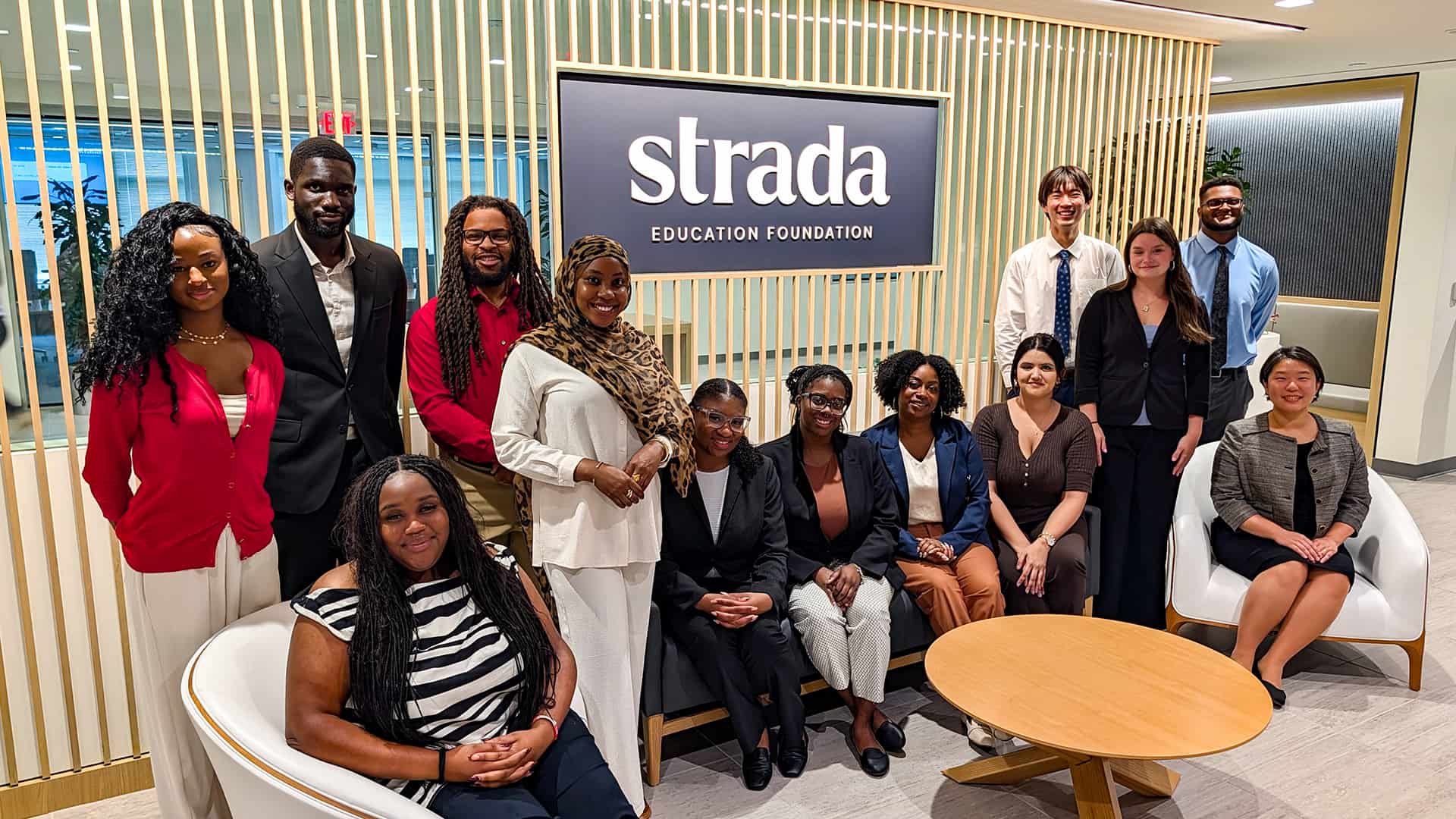
The summer 2026 Strada Education Foundation interns were exposed to the work of a national nonprofit while building skills for their future careers.
.jpg)
At a State Higher Education Executive Officers Association convening in Washington, D.C., delegations of state leaders exchanged policy developments on work-based learning evidence and solutions.

A new Strada grant aims to test and support the effectiveness of employer intermediaries, which can fill a critical gap between the learners and employers.
.jpg)
Work-based learning is linked to better early career outcomes, including higher earnings and greater likelihood of securing college-level employment. As part of the 2025 State Opportunity Index, states were benchmarked using student-reported participation in at least one of five types of paid work-based learning at public two- and four-year institutions: internships, apprenticeships, co-ops, practica, and undergraduate research experiences.
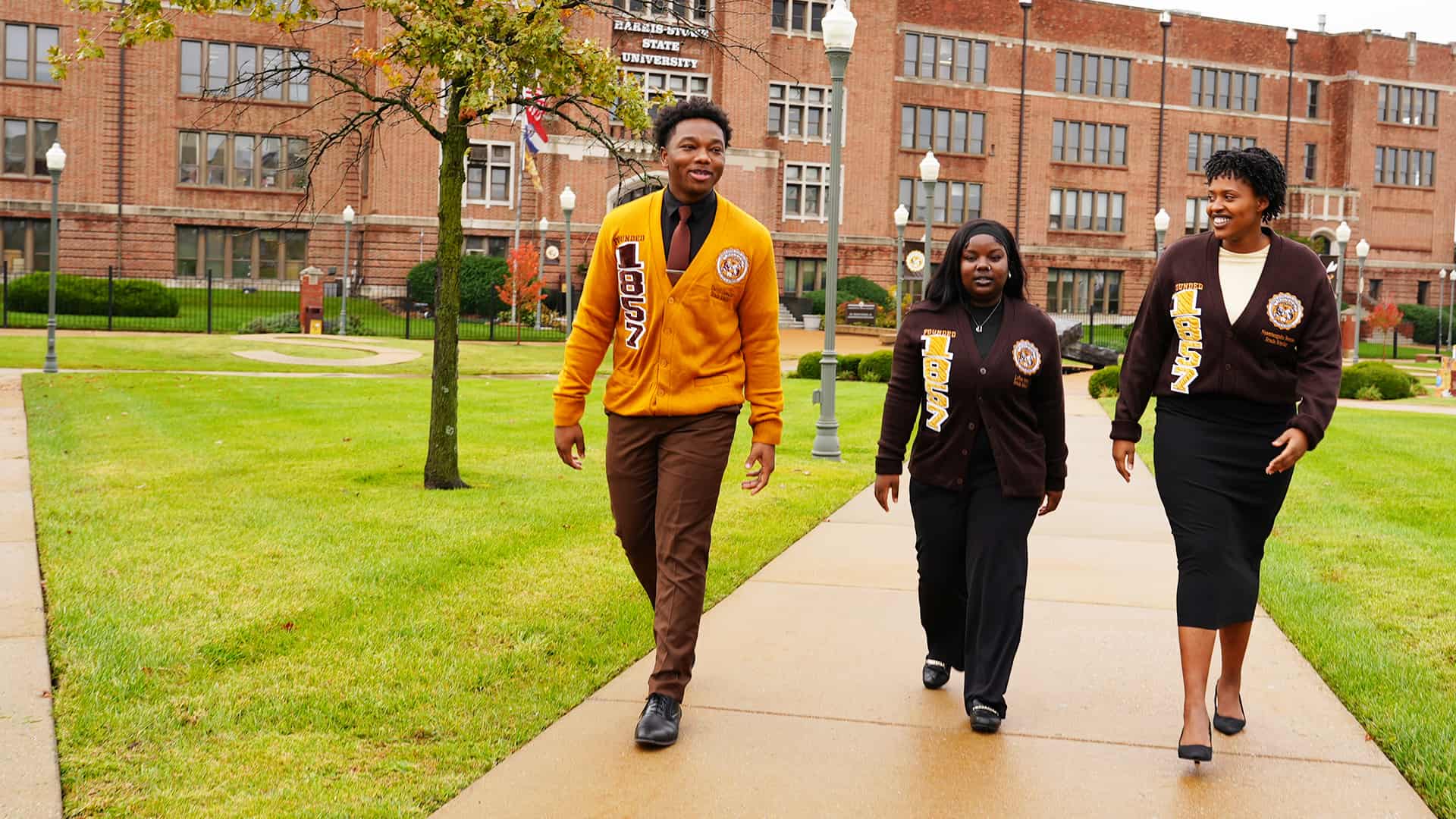
As Strada’s eight-year investment in historically Black colleges and universities reaches its halfway point, the partner institutions and students involved reflect on how it helps students connect their education to economic opportunity.
.jpg)
In partnership with Strada, an action group of intermediary organization leaders, researchers, and policy experts came together in 2025 to define and guide the practice of employer intermediaries in order to grow work-based learning opportunities.
This report provides actionable guidance for talent acquisition, learning and development, human resources, and workforce strategy leaders. It is designed for employers who already see internships as valuable, but who are seeking clearer frameworks, stronger alignment to business priorities, and more consistent ways to articulate and measure program value.
The practice of learning on the job has been around for centuries, but its capacity to prepare learners for the workforce and expose businesses to emerging talent is generating modern excitement.
The Framework for Effective Employer Intermediaries defines employer intermediaries not by organization type but rather by the functions they perform to help employers design, implement, and scale work-based learning programs.
Large-scale systems-level change requires sustained attention and dedication, so when Strada looks back at progress made over the past year, we are inspired by moments that point toward a future in which every person — no matter where they start — can envision a way ahead that is filled with opportunity.

While overseeing the organization’s portfolio of affiliates, Cobert also leads multiyear partnerships with mission-aligned nonprofit organizations.

More than 300 education and industry leaders from 36 U.S. states came together to learn from one another about how states are connecting education after high school with economic opportunity.
A recently released Strada report analyzed survey data from seniors enrolled at public four-year universities and colleges about a portion of the universe of work-based learning experiences.
.jpg)
The components are industry leaders that have the skilled workers they need, education and training providers that understand employers’ needs, and strong collaboration between those employers and educators.

One of the most promising strategies for helping students connect their education to career opportunities is giving students the opportunity to participate in off-campus learning experiences that are aligned with their field of study. Unfortunately, these work-based learning experiences remain too scarce.
For learners, work-based learning improves access to a network, skills, and real-life work scenarios. For employers, it lowers the cost to hire and increases retention.

A new Roadtrip Nation documentary, “Rethinking Higher Ed,” asks: What is required to ensure the path provides the most value for each person? Where do students find guidance as they chose their path? How can we be sure every learner has a guide?

This year the Strada HBCU Initiative celebrates its fourth year — a milestone that includes the graduation of many students in the first cohort of Strada Scholars.

One year after its release, Strada CEO and President Stephen Moret reflects on what has been learned so far and what to expect in the next iteration.

Strada is extending an invitation for each institution to participate in the State Opportunity Index survey and to receive confidential and benchmarked results, free of cost.
.avif)
Even though internships impart a strong labor market advantage that tends to persist after graduation, the nation’s supply of internships has not kept up with demand. A new report provides insights.
.avif)
Strada’s agenda lays out ambitious steps for improving education and employment systems so students realize the economic value of their education and employers have the talent they need to fill jobs.

The Building Better Internships report looks at the latest findings from the National Survey of College Internships, a survey developed by the University of Wisconsin-Madison’s Center for Research on College-Workforce Transitions.

Both Robinson and Love will support the foundation’s efforts to conduct research and develop policy solutions.

Through the Arizona State-led Work+Collective, more than a dozen institutions are injecting mentorship and career development skills into students’ employment.

Applied connections between education and work are increasingly a part of undergraduate education in the United States.

The foundation’s president and CEO and former chancellor of the California Community Colleges explored a Strada report that captures factors that motivated recent alumni to enroll in community college.
Three-year grants awarded to four institutions will support the expansion of programs designed to help learners succeed during and after completion of their degree or credential.
The two-year grants will support proven partnerships that connect learners to education and in-demand employment opportunities and strengthen regional economies.
A new study from Strada reveals a silver lining at a challenging time in the employment world.
As the U.S. faces a dramatic period of job turnover, economic uncertainty, and postsecondary enrollment declines, employers and educators seek to find ways to meet rapidly changing education and workforce needs.
Phase 2 allows Taskforce on Higher Education and Opportunity members to seek up to $1.5 million ($6.25 million total) to expand efforts to connect education to employment.
Disparities in securing paid internships persist for women, people of color, first-generation college students, and students with low incomes — even when taking into account their fields of study.
Strada announces the winners in the initial phase of a grant challenge aimed at helping higher education institutions improve career and life opportunities for several disadvantaged populations.
The recognized economic and workforce development leader with successful tenures in Virginia and Louisiana will join the national nonprofit in January 2022.
The grant competition seeks to connect learning with employment for first-generation students, those who struggle to afford education, and students of color.