Work-Based Learning: Who Gets Paid?


Summary
Work-based learning is linked to better early career outcomes, including higher earnings and greater likelihood of securing college-level employment. As part of the 2025 State Opportunity Index, states were benchmarked using student-reported participation in at least one of five types of paid work-based learning at public two- and four-year institutions: internships, apprenticeships, co-ops, practica, and undergraduate research experiences.
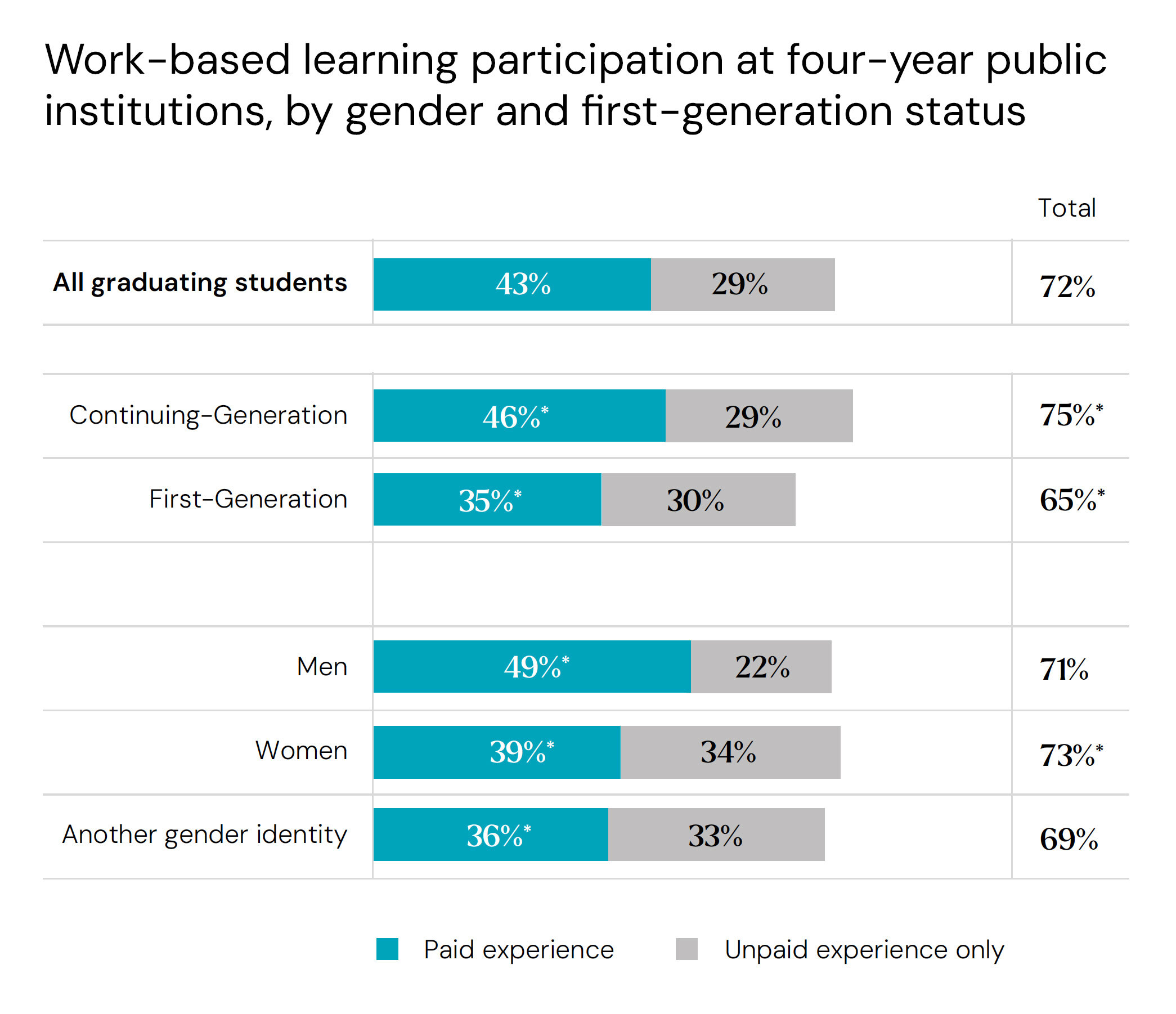
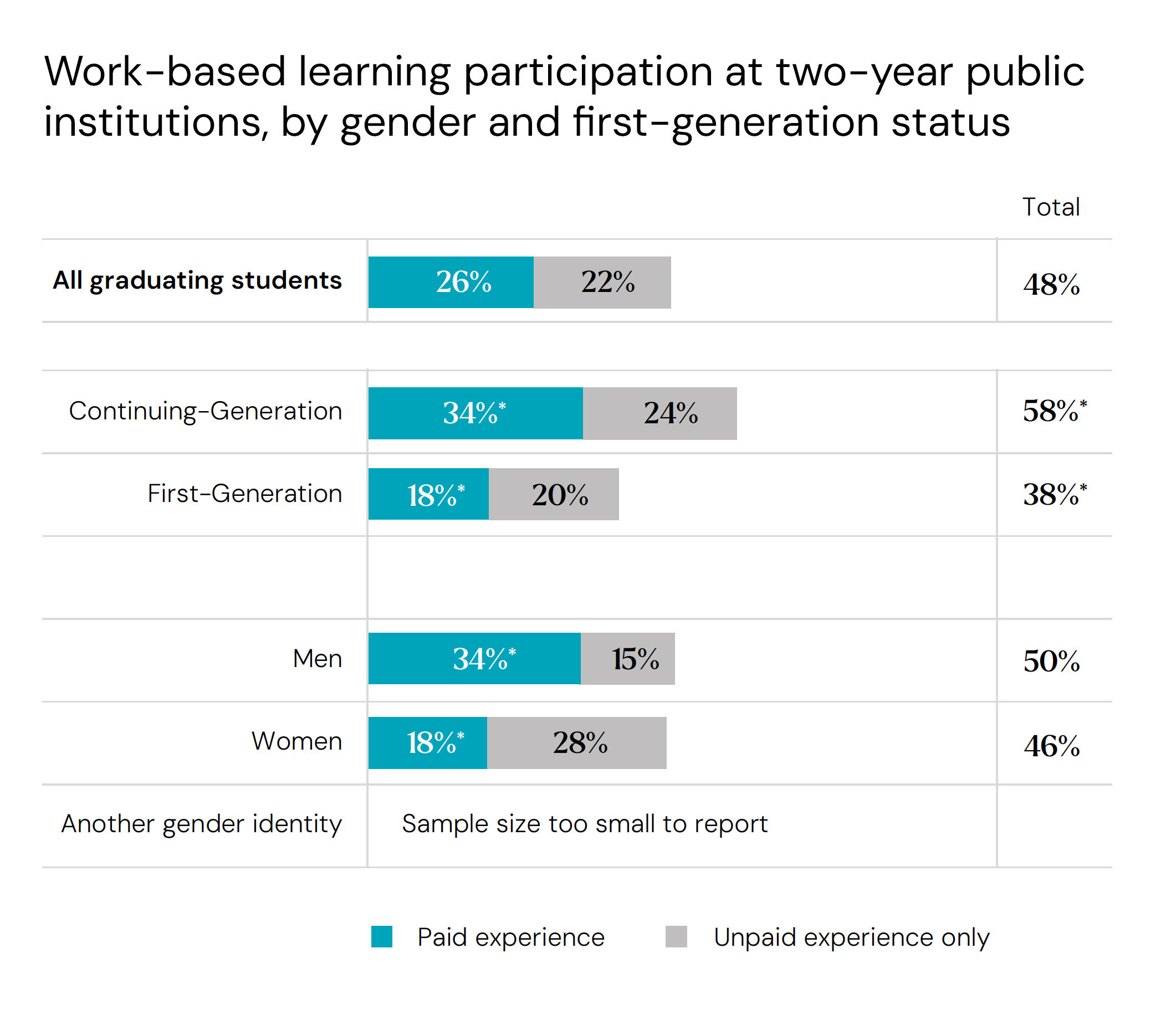
The findings, based on surveys of more than 56,000 students at public four- and two-year institutions, showed that despite growing recognition of the value of work-based learning, access remains uneven. Nationally, only 43 percent of students at public four-year institutions report at least one of these experiences. At public two-year institutions, participation rates are even lower.
Building on the state-by-state analyses in the Index, this brief examines national participation patterns across demographic groups and institution types, highlighting key areas of strength and areas where targeted support may be beneficial.

Key findings
Participation in paid work-based learning experiences is limited.
Paid work-based learning varies strongly by field of study.
First-generation students and women are less likely to experience paid work-based learning.
Students at better-resourced and more selective institutions are more likely to have a paid work-based learning experience.
Quality coaching is associated with higher participation in paid experiences.
Highlights
At both four- and two-year institutions, first-generation students (students whose parents do not hold college degrees) and women are less likely than continuing-generation students and men to have a paid experience.
Recommendations
To ensure that every student can participate in a paid experience, states and institutions may want to consider:
Prioritizing the collection of data on participation in paid work-based learning to identify the specific gaps present in individual institutions and within state systems.
Targeting resources to develop and fund paid work-based experiences in fields of study that have fewer paid opportunities — such as the liberal arts and sciences, in which unpaid internships and research experience are more common — and education and health fields, in which practica have traditionally been unpaid.
Focusing state strategies on institutions with fewer resources to increase the overall percentage of those participating in paid work-based learning before graduation.

.jpg)

%20copy.jpg)
.jpg)

.jpg)






.jpg)



.avif)
.avif)


