Quality Coaching and Guidance: Experiences, Sources, and Student Confidence


Summary
For key decisions such as what institution to attend, what to study, and what experiences to pursue along the way, college students can benefit from both formal and informal guidance, information, and support to understand the connections between who they are, what they aspire to, and how to be successful in that quest.
The education-to-career guidance provided by quality coaching helps learners understand their options, connect educational experiences to workforce opportunities, and navigate barriers along the way. The State Opportunity Index defines quality coaching as the combination of three core elements and categorizes states based upon what portion of students report having these experiences:
- Personalized guidance: Coaching or guidance to help students select the education that will prepare them for successful careers.
- Timely labor market information: Information about education-to-career pathways that may be the best fit for their strengths and interests, job opportunities, earnings, and career outcomes of students from their own institution, delivered either before enrolling or during their first year of education.
- Support: Help with setting education and career goals and developing a plan to achieve them, and overcoming barriers to success.
Building upon the state-by-state reporting in the State Opportunity Index, the additional analyses in this report explore variations in experiences across student populations and fields of study; the sources and channels through which students experience education-to-career guidance; and how quality coaching experiences are linked to student perceptions of the affordability, value, and career preparation of their college education.
To collect this data, Strada partnered with College Pulse, Trellis Strategies, RTI, and Generation Lab to conduct an online survey to collect data on quality coaching experiences among students at public associate degree-granting institutions (all students excluding dual-enrollment students) and seniors at public bachelor's degree-granting institutions (students in their last year of study).

Key findings
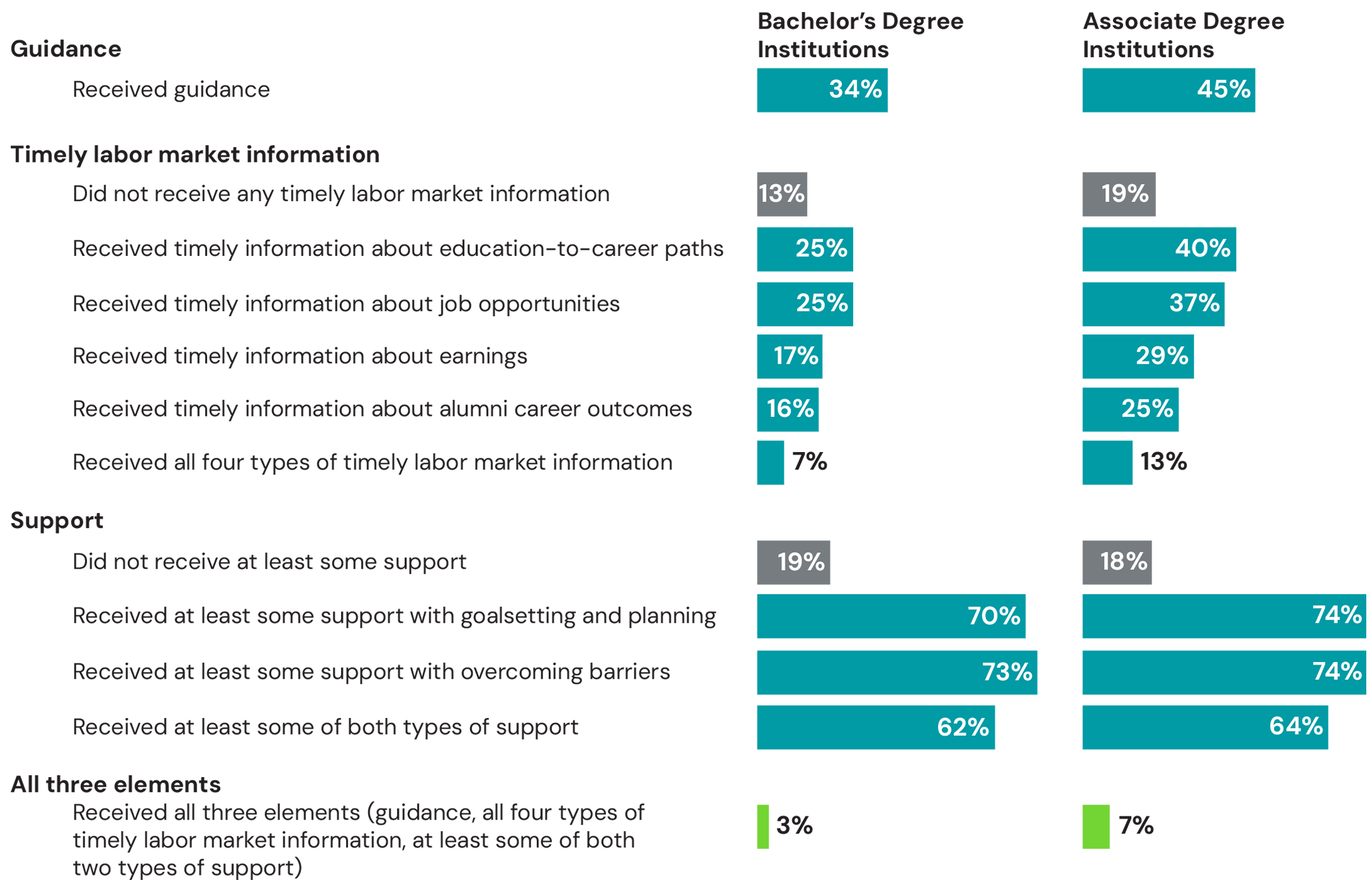
Most students report receiving support – about 6 in 10 receive at least some support in both setting goals and developing a plan to achieve them, and in overcoming barriers to success. However, substantially fewer receive personalized guidance to help them select education and training experiences to prepare them for a successful career, and even fewer receive timely labor market information about career pathways, job opportunities, earnings, and employment outcomes.
Students report finding value in multiple sources of coaching, including advisors, faculty, family members, friends, employers, community organizations, online and digital tools, and others. Family, in particular, is cited most often as the most valuable source of quality coaching: Among those who received guidance, 25 percent of students at public bachelor’s degree-granting institutions and 27 percent of students at public associate degree-granting institutions cited family as their most valuable source.
Students who receive all three elements of quality coaching participate in paid work-based learning at higher rates than those who received none of the elements of quality coaching (51 percent versus 42 percent). The association between quality coaching and work-based learning is positive for both low-income students and middle- and higher-income students.
Highlights
Most students report receiving support – about 6 in 10 receive at least some support in both setting goals and developing a plan to achieve them, and in overcoming barriers to success; however, substantially fewer receive personalized guidance to help them select education and training experiences to prepare them for a successful career, and even fewer receive timely labor market information about career pathways, job opportunities, earnings, and employment outcomes. As a result, only a small share of students experience comprehensive coaching that includes all three elements.
Receipt of Quality Coaching elements and comprehensive Quality Coaching at bachelor’s and associate degree institutions
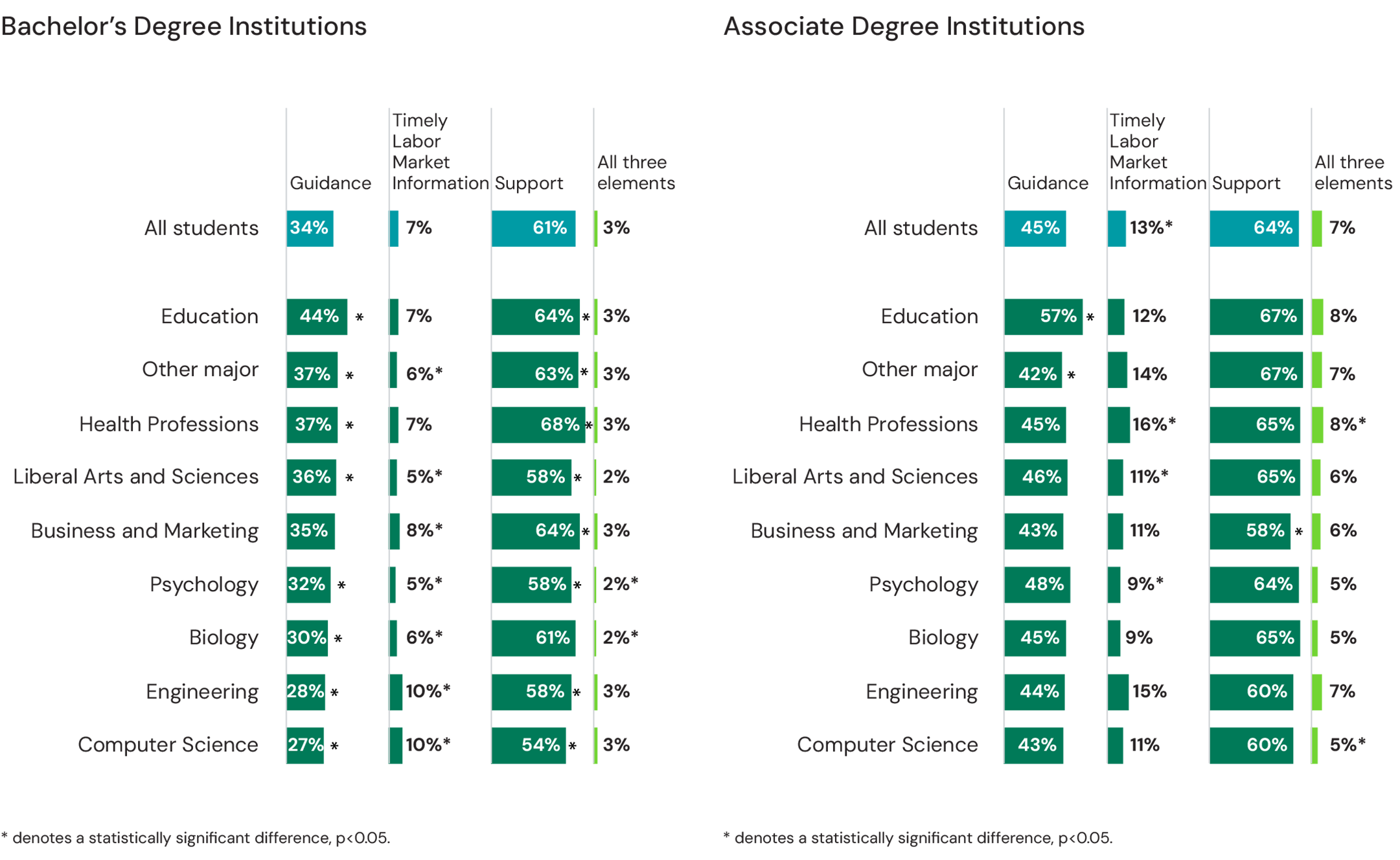
Meaningful differences in how students experience quality coaching also are present across fields of study.
Experience with elements of Quality Coaching by field of study at bachelor’s and associate degree institutions
Recommendations
To ensure that every student receives a comprehensive coaching experience, institutions may consider:
Building commitment to a shared strategic vision for integrating education-to-career guidance across the student experience.
Academic departments, career services, student support programs, and institutional research all have a role to play in creating a career everywhere experience for students. Integrating coaching into the experiences that are part of every student’s journey ensures that the benefits of coaching extend even to students who do not have the time or awareness to seek it out on their own.
Prioritizing coaching at key choice points along the student journey.
In addition to an overall culture of education-to-career connection, there is an opportunity to explicitly integrate guidance, LMI, and support at natural milestones that take place well before soon-to-be graduates are looking for jobs.
Preparing students to access coaching and equipping their networks to provide it.
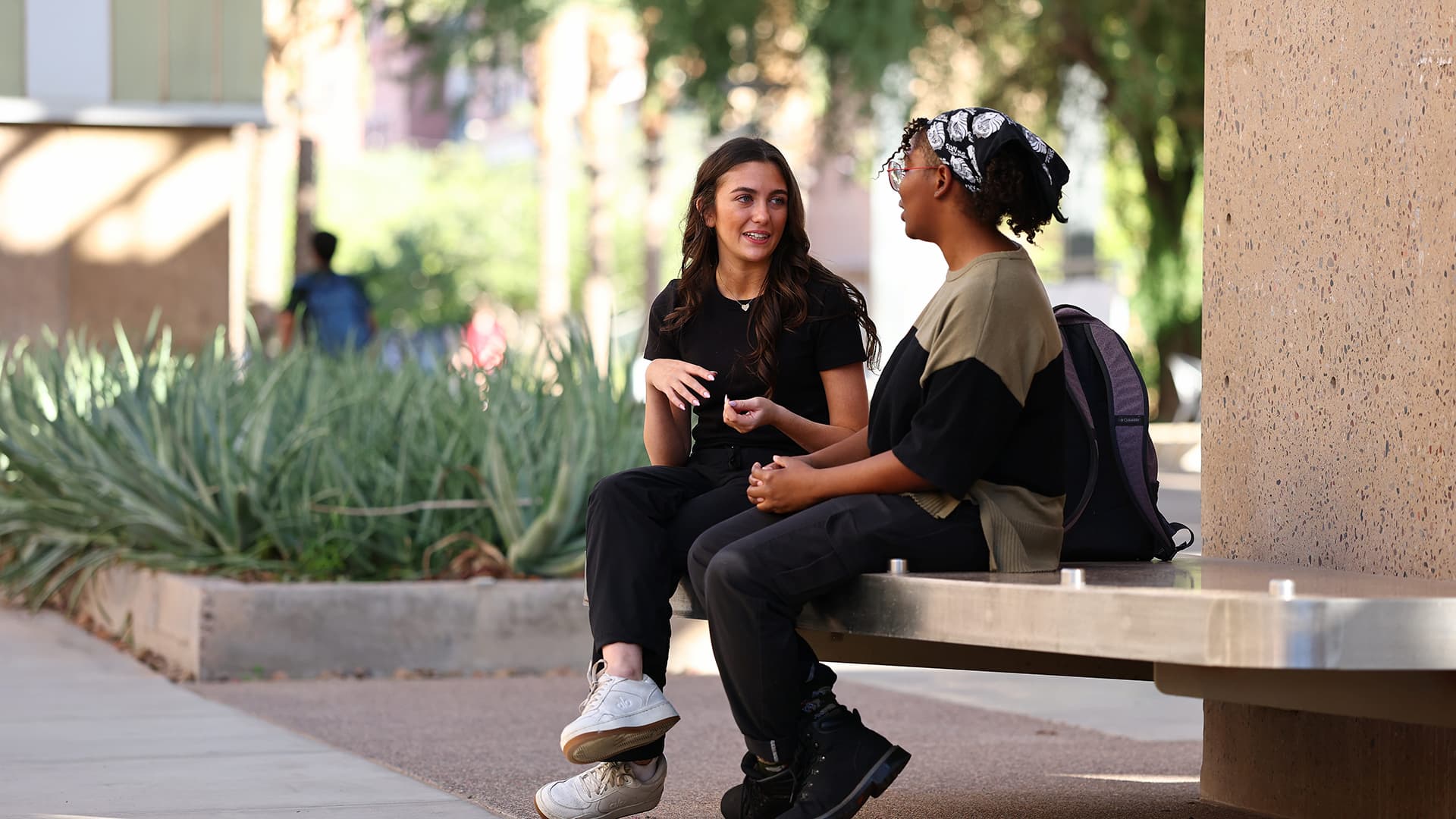
Learners can be encouraged to have conversations about their career interests with people they trust, and guided in identifying key questions to ask and understanding how to initiate these conversations. Institutions can provide resources and clear information to those whom students rely on, including advisors, faculty, family members, peers, employers, and community organizations.



.jpg)
.jpg)




.jpg)
.jpg)


.avif)